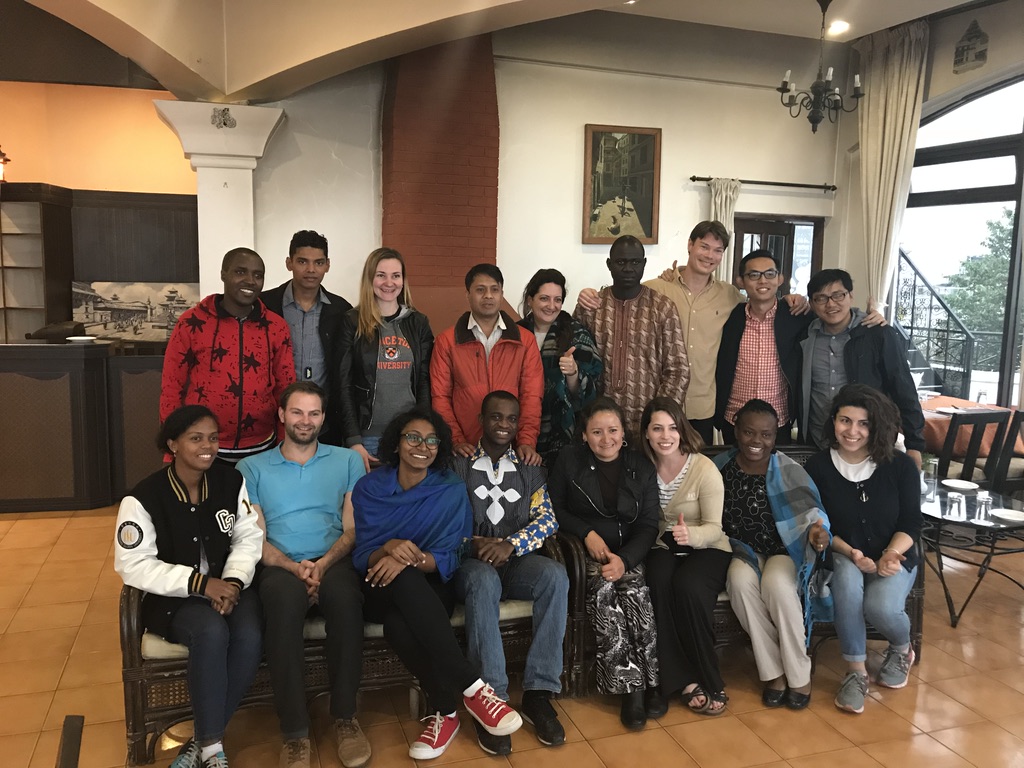
Bharat was shy. Sometimes it was hard for him to strike up a conversation with someone new. But that did not keep God from using him. He became involved in student ministry as a key leader in the training department of his national movement. It was challenging for him to work in a group sometimes, especially in a culture that valued being expressive and friendly to others.
His perspective on leadership changed when he joined IFES’ Global Leadership Initiative. This program took his cohort through a deep journey to understand the ethos and calling of leadership within IFES, training up the next generation of leaders so that national movements would have people ready to take on increased responsibilities in regional or global projects and positions.
Being in an international cohort exposed him to different people from around the world with different personalities, cultures, and leadership styles. He says this experience helped him recognize and develop the gifts he already had.
“GLI helped me to discover my different strengths related to my spiritual gifts. By understanding those aspects, it also gave insight into my ways of leadership. It helped me develop those areas to best work in the team and use my gifts and strengths to develop staff team and students. For me, learning from GLI was not only an opportunity to be trained, but was also an opportunity to apply what I learned in my day-to-day involvement with the movement.”
Bharat began implementing what he was learning, encouraging his students to take ownership of their spiritual formation, and creating a learning environment that encouraged active participation, rather than lectures. Being in a culturally diverse cohort also helped him relate better to the students in his own culturally diverse country of Nepal.
Bharat is part of the first cohort of promising young leaders who are being mentored through the Global Leadership Initiative. Previous participants have been appointed to regional leadership roles, have contributed to regional projects, and have been invited into the program planning team for World Assembly. Pray with us for this program that is developing the next generation of IFES leaders.
Pray for this cohort, which is still on their journey, delayed by the pandemic. Pray that they would be encouraged to keep going.
Pray for the individual ministries of each cohort member. Pray that they can practically implement what they learn.
Pray for the future leaders of IFES, that they would be the right people, full of passion and wisdom.
As other parts of the world slowly recover from the pandemic, South Asia falls deeper into the clutches of an insidious virus. The situation is grim. Health workers are stretched beyond their limits and essential medical supplies are in shortage. Hospitals are at full capacity and do not have enough supplies to meet the overwhelming need. One member of UESI India says,
“With tears I received the call from a UESI graduate serving in a rural hospital in central India, that their 90-bed hospital does not have even one ventilator.”
As of 26 May, more than 1000 people associated with the UESI movement had been infected by the virus, including several who had passed away. The situation is also worsening in other countries like Nepal, where many are unable to get help due to an uneven distribution of resources, and hospitals are overcharging for care.
Still, IFES movements are doing their best to be salt and light in the crisis, despite many of their own being sick or grieving the death of loved ones. Throughout India, UESI has displayed a wonderful witness of the church, with many UESI alumni opening their buildings, establishing makeshift medical facilities, working as care-givers, and providing provisions.
IFES leadership in South Asia are asking for help. There is a race for oxygen concentrators in the region, and IFES alumni can facilitate the sending of this equipment to hospitals and COVID-19 care centers. The region also welcomes any medical professionals to consider coming to help with the crisis. IFES South Asia can facilitate student or graduate volunteers to serve for long or short-term commitments alongside local graduates in the region.
They also ask that you consider linking up with student groups in South Asia to pray and will facilitate such online meetings. A staff member from UESI says,
“I do believe that some such meetings can be the point of students discovering their call to mission as an answer to the matters that they see, hear, and pray for.”
To know more about how you can help the situation in South Asia, please contact Reji Daniel at reji.betsy@gmail.com.
Pray with us this week for South Asia.
Pray for more funds to buy medical supplies and pray for a quick delivery of these supplies, as the lead time for the delivery of oxygen concentrators is over four weeks now.
Pray for the health workers who are on the frontlines, that they may be given extra strength to press on without burnout. Pray for several IFES alumni who are on medical mission in South Asia.
Pray that the hospitals would miraculously gain more capacity to care for the sick through better infrastructure and qualified medical professionals.
Pray for the IFES movements and churches in South Asia as they brave numerous challenges to care for the sick.
IFES is also planning a special Day of Prayer for Friday 16 July in which we will lift this and other current global challenges before the Lord. Further details about how you can take part will be available in upcoming Prayerlines.
In June, we prayed for NBCBS student groups in Nepal who were struggling with poor internet connectivity. The movement has persevered in COVID times,withstanding largecase numbers, disrupted studies, and limited technology.Now, they have seen one of their biggest prayers answered just a week after World Student Day.
Pratigya stared at the list of Nepalese student groups on her screen. No one from the far west, she thought. As prayer coordinator for World Student Day, it was her job to contact the student leaders from all 7 provinces in the country. Yet as she worked through the list, she realized that the far west province was not accounted for. In her heart she felt a tug. You could plant a group there from far away. You’ve been doing ministry online for months now. What is stopping you?
In that moment she felt compelled to pray for a group to develop in this hard-to-reach region. She wondered if she had been given the role of prayer coordinator for World Student Day so she could draw attention to this need. She knew that God could move, but first they had to pray. On World Student Day, 200 Nepalese students gathered on Zoom to pray for the university– and to pray that a group would begin in the far western province of Nepal.
Before the pandemic, Sharad Lama, the General Secretary of NBCBS, had traveled to the region to identify Christian students. He had managed to collect some contacts and hoped to return to begin a group. But heavy travel restrictions due to Covid-19 had derailed his plans. Still Pratigya believed that an online group was possible. Guided by the prayers from World Student Day and using the contact list from Sharad, Pratigya reached out in faith to five students in the far west.
The students were very receptive to weekly virtual Bible studies with Pratigya, as much of their lives already revolved around video calls. Over a month later, they are still meeting to open the Bible together and talk about leading fellowships on their own campuses. NBCBS hopes that eventually the students will begin five new groups in the western province.
This week we are rejoicing with our brothers and sisters in Nepal who saw God move through prayer on World Student Day. Please join us in prayer for the students from the far west of Nepal.
Praise God for answering this prayer so soon after World Student Day!
Pray that these five students would feel invested in their new group and continue to meet regularly.
Pray that they would desire to grow in their leadership abilities and feel confident to start their own group when the time is right.
Pray for NBCBS as they continue to battle with poor internet connectivity. Pray for strong signals especially in their virtual meetings.
We had to be part of the solution. Too many lives were lost to a deep hopelessness rooted in my country. How could we watch these people suffer when we ourselves knew of a hope to heal their anguish? After World Student Day, our FOCUS Sri Lanka group challenged ourselves to identify the societal problems in our country and to act. We had dared to look, and upon examination discovered one abhorrent word – suicide.
This word was not unfamiliar to us. It was mentioned many times on the news or even whispered among friends. We knew it was a problem, but like most people, we had never directly faced it. Suicide is an uncomfortable topic, one that isn’t easily discussed at dinner tables or family gatherings. But without understanding, our efforts would mean nothing. We had to talk to those affected by suicide.
Understanding the Issue
Last year, the theme for World Student Day focused on breaking down barriers within universities and challenged students to examine issues within their society. Rebecca and a group of students from FOCUS Sri Lanka were ignited to address the problem of suicide in their country. In order to understand the issue, they designed a research project to gather data from those most affected in the eastern region. Through a network of pastors, they made a list of villages to conduct interviews. Though it was an uncomfortable topic to air, they hoped the initiative would lead to change.
Their efforts were well received in each place they visited. Rebecca says,
“When we went into the villages, the leaders gave a good welcome to us. They appreciated our initiative and supported us. They shared the practical issues of their villages and the main struggles they were facing together.”
Before beginning the interview process, students spoke with village pastors who advised them on potential challenges. As they engaged with different households, students were grateful for the prior guidance. While many people wanted to contribute to the research, broaching the delicate topic required sensitivity. Through heeding the words of their advisors, these difficult conversations led to substantial results. Rebecca says their research revealed how little they had previously understood about the people affected by suicide.
“In the beginning we had a narrow mindset about suicide. We thought that the people who attempt suicide are youngsters. We understood the real situation after contacting the particular villages.”
The study showed that most victims were married women from the age of 25 to 35. Most commonly they were agricultural workers driven to hopelessness by financial issues. While these cases were the majority, the students also discovered that many young people between the ages of 16-25 were committing suicide because of relationship issues.
Taking Action
With their new knowledge, the students moved to the second phase of their plan. They began a campaign in each village, speaking at churches and secondary schools about how suicide is not the solution. They advised attendees to share their problems with people they can trust and encouraged them to expand their career prospects through education. Most importantly, the students shared about the compassion of God and the power of prayer.
Rebecca was amazed by the response to their campaign.
“Soon after each awareness program, at least one person came to us and shared their feedback. Some shared their issues, some asked us for further help. They wished us well and encouraged us to do similar events in other villages and churches.”
The students were moved. They could not believe that a simple idea inspired by World Student Day had actually made an impact. Rebecca says,
“We learned how we should do more for our future society, how to reveal God in identifying and dealing with social problems, and how we can help society as Christians.”
What can you do to create change in your society?
Rebecca says that in order to address injustices, you must take the focus off yourself and open your eyes to the issues of others. She recommends starting by identifying the injustices occurring on your own campus and raising your voice against them. Finally, she reminds students to let their own testimony of God’s love be the thing that encourages them to action.
Focus Sri Lanka is an example of students who identified a problem and took initiative. Don’t wait for others to act against the injustices in your society. Look around you, identify the problems, and use your voice to create change.
One by one they gather on the video call. As the screens light up with each new face, the girls wave and greet each other, excited to see their friends. Suddenly they hear the unmistakable crackle of unstable internet connection from someone’s video. Everyone stops and waits, hopeful that the connection will hold. They breathe a sigh of relief when their friend’s face moves, and they return to their conversation.
After the lockdown, this group of girls from NBCBS Nepal have stayed in touch as best they can, but poor internet connectivity presents a challenge. They have resigned themselves to studying scripture individually and meeting via video call every two weeks to reflect together. Their devotions focus on anxiety and how to find comfort through scripture.
Talking about anxiety is important, as many students are worried about their studies. Since the mountainous regions do not have stable internet, many are unable to continue their coursework online. For one of the group members called Pratigya, it means that she won’t be able to finish her law degree this year, which might make her lose the opportunity to study overseas. Yet, Pratigya has found comfort from the Word of God. She says:
“God has been teaching me to be thankful for whatever the situation is. Looking around at the circumstances and the painful situation, I’m reminded by his word that everything shall pass and there is a hope for future, as it says in Proverbs 23:18.”
Let’s pray for students in Nepal this week as they grapple with the uncertainties related to the lockdown.
Pray that students will surrender their anxiety to God even though their educational plans are disrupted.
Pray for stable internet for Christian groups meeting online. Also pray for those who do not have access to internet and feel isolated from their Christian fellowship.
Pray for the country of Nepal during this crisis. The number of COVID-19 cases are rising due to migrant workers entering through the Indian border. Not only is this worsening the pandemic, but it is also increasing tensions with India.
Niloy’s friends don’t always come to BSFB fellowship meetings. Some Christian students in Bangladesh are from Muslim families who don’t approve of their faith. But even those from Christian families are often forbidden from attending! Why? Some are concerned that their children are too busy already with a huge university workload. Others are worried for their children’s safety: when students meet, they risk having bricks or sticks thrown at them by aggressive non-believers.
In addition to these social obstacles, the COVID-19 restrictions and the devastating Cyclone Amphan will create more challenges for Niloy and his friends to share the gospel or fellowship in the coming months.
However, prayers answered in the past fuel their encouragement for the future. Earlier this year Niloy and his friends were able to hold a BSFB event on the theme of thanksgiving. The money for the event came in just the day before! Niloy remembers:
“Through this program, we realised that we should always rely on God and show our gratitude to him. It was a blessed day. Many students even accepted the Lord as Saviour that day! Since then I’ve seen students are connecting to God with a stronger faith.”
Let’s pray for Niloy and BSFB Bangladesh this week:
Thank God for the 1,800 high school and university students involved in BSFB Bangladesh, and particularly for those who professed faith this year.
Pray that God would help these students to find ways to keep meeting despite the enormous challenges of COVID-19 and Cyclone Amphan.
Pray that students would remain thankful and faithful to God, despite the persecution and challenges they face.
Pray that God would provide a way for two regional camps and a governance training for the BSFB board to go ahead this year, perhaps postponed or online.
Pray for opportunities to start ministry in the country’s medical schools.
My mother had always told me: education is your greatest
indestructible asset in life. As I walked around the university campus that
first afternoon, I felt a wave of anticipation. I had worked hard to get here.
My results proved it. And now, this was it. This was my break – my chance to finally
move ahead in the world, my chance to get that indestructible asset and
make my mother proud.
But the dream didn’t last long. That night in the student hostel,
the harsh reality hit.
My accent gave me away first. Then they asked what’s your good
name? And of course, they knew. I was a Dalit. Some of the boys started mocking
me. They told me I was only there so that the university could meet their quota
for Dalit caste enrolments. Quota. It became my unwanted nickname.
This wasn’t new for me. I’d been the victim of discrimination my whole life. But somehow I’d hoped university might be different.
Lawyers and toilet cleaners
For
many students in India, the caste system will significantly shape their
university experience – and indeed their whole life. But for students outside
India, caste might be an unfamiliar concept.
The
caste system is India’s ancient societal hierarchy. It divides up the people into
different classes, or castes. A student from a high caste is the most
privileged in terms of their status, education and career prospects. They might
become politicians or lawyers or doctors.
The
Dalit caste – illustrated above – comes below the four main castes. They are
known as the ‘untouchables’. Typically, they do the ‘untouchable’ jobs, like disposing
of dead animals and cleaning toilets. A young person from the Dalit caste has
very little chance of getting a place at university. They cannot change their
caste. The system has been described as a multi-storey car park with no stairs
or elevators – no way of moving up or down. You stay in the caste you were born
into.
There are other disadvantaged castes in India, referred to collectively as Other Backward Class (OBC).
The devastating results
But
what about the student in our story? Didn’t he make it to university?
What
his classmates said is likely to be true. Government and educational
institutions now reserve a certain number of positions for people from
‘backward’ castes, in an attempt to reverse some of the disadvantage they have
in society. But still, the issue remains. Discrimination persists, with
devastating results.
In May 2019, a young graduate doctor committed suicide after allegedly being harassed by three senior doctors of higher castes. It is by no means the first story of its kind. But far more common are the stories that never make it into the news. The scornful looks, the cruel comments, the unfair exam marking, the frustrated dreams: this is everyday life for young OBC people in India.
Lakshmi Prasad – iStock
Christians who care
So what can be done? What is the biblical response to caste? How should Christian students respond today? Two UESI graduates feel deeply about this issue and shared their reflections:
Get talking!
Ignorance about the issues surrounding caste is a huge problem. Many universities in India already have anti-caste engagement groups. Christian students should join such groups and contribute to the conversations with a biblical worldview. Or Christians should start such groups if they don’t already exist – as we did in the southern Indian city of Chennai. The university is a fantastic place to facilitate dialogue and challenge the status quo. It should be Christian students taking the initiative to speak out, inviting students from all different castes into the conversation.
Make the invisible visible
One powerful sign that we have the love of our invisible
God, is when we love our visible neighbours impartially. We may be studying
alongside the disadvantaged and oppressed without ever thinking: are they
visible? Are their concerns talked about? Is their worldview represented? Are
their research papers recognised?
Christian students should do what they can to facilitate an environment where students from all caste backgrounds are included, heard and respected. When caste-based violence goes unreported or university professors display caste-based favouritism, it is for the Christian student to make the invisible visible.
Steward our university learning
The negative effects of the caste system can be seen
throughout every aspect of society. Will the Christian student choose to use
their discipline to help? Could an engineer find innovative sanitation
solutions to replace manual scavenging? Could an arts student create a movie or
a piece of music that subverts a certain caste stigma or prejudice, or that
celebrates the beauty or unity found in the culture of another caste? Could an
architect look into slum development housing projects? Could a sociologist
re-write the history books to represent the disadvantaged authentically?
The possibilities to steward our university learning to help the disadvantaged are endless!
Shape our student groups
What do our student fellowship groups say about our attitude
to the oppressed around and among us? Are we making an effort to study,
understand and discuss inter-caste histories in our group? How accountable is
our group with regards to fighting caste and similar social discriminations? Do
we include a teaching of caste as part of Christian discipleship curriculum to
young believers? How inclusive are our student, graduate and staff groups? Do
we take measures for affirmative action and intentional representation?
It is clear that such an engrained social reality will not
be changed overnight. But, as in every culture and society, Christian students
and graduates have the responsibility and mandate to be agents of change in
their generation.
It would have been difficult to
guess his age. His face was weathered, his tattoos faded, and he spoke with the
quiet wisdom of one who had seen and suffered a lot. Only when talking about
Jesus and his love for the students of his country did the brightness of his
eyes betray his youth.
Sonam* shared his remarkable story.
The truth he’d been
longing for
Sonam had not had an easy life. His
parents had divorced. Most of his childhood was spent with neighbours or
relatives. He often wondered why he’d been brought into the world, why he’d
ended up with this family. He kept bad company and numbed his pain with
alcohol. His family disapproved of him; his schoolfriends didn’t like him.
At high school, someone invited him to go to a Christian camp. Sonam had heard of Christians before, but he’d never seen one. Everyone he knew was a Buddhist. Compelled by curiosity, he decided to go along. That was where he first heard the gospel. A God who loved him? A God who accepted him and had a purpose for his life? This was incredibly good news! Sonam accepted Christ and found the unconditional love of a Father he had been longing for.
Taylor Simpson – Unsplash
Truck-travelling
Today Sonam is pioneering a new
student movement in his country in South Asia. There are now Bible studies
happening in a few colleges and one graduate fellowship. Sonam travels across
the country on the back of a truck, visiting the students on different
campuses. It’s not easy. The groups are not allowed to meet openly on campus. Those
who convert to Christianity will face discrimination in society and opposition from
family. Some keep it a secret, reading their Bibles after everyone in the house
has gone to bed. Their parents might stop paying their tuition fees if they
find out.
As the only staff member, Sonam is praying for wisdom in recruiting a board for the movement. He would love to see the movement affiliate to IFES at the next World Assembly.
Big dreams
That’s not his only dream. Sonam
dreams of seeing Christian students going on to change their communities: an
end to street fights, drug trafficking, alcohol abuse, divorce. He dreams of
seeing Christian students impacting their churches, working together across
denominations as Bible-saturated, missional churches. He dreams of seeing
Christian students choosing to move to the rural areas after graduating, where
40% of people have never even heard the name of Jesus before.
These dreams fuel his prayers and
dictate his next steps: recruiting staff, preparing for the student camp, investing
in new student leaders, finding a permanent ministry base, starting a Bible
study in the yet-unreached campuses.
Join us in praying that Sonam’s dreams
would become a reality.
Kevin studies civil engineering in Nepal. He is one of only
three Christians in his college. His friends are mostly Hindus and like to ask
him difficult questions about his faith – the kind of questions that could
easily unsettle you in your convictions.
A couple of months ago, the questioning intensified. And Kevin
had an idea: he decided to write down all the questions his friends were
asking. Then he took along his list of questions to an interactive event on
worldview, organised by NBCBS, the IFES movement in Nepal. Kevin learned there about
apologetics and grew in confidence to tackle the difficult questions he was
asked by his friends. Since then he’s even started writing blog articles on
apologetics to share with other Christian students, so that they too can defend
their faith when it’s challenged by difficult questions.
Let’s pray together to our God who hears:
Thank God for Kevin and the ministry of NBCBS. Pray that Kevin’s friends would have their eyes opened to the truth of the gospel.
Pray that all the Christian students of NBCBS would be able to engage with difficult questions with confidence and competence.
Pray for the planning of the national NBCBS winter retreat. Pray that students from many different colleges and universities would attend.
I am Samuel Poologasingam from Sri Lanka. I believe that every university in the world should have a united Christian witness. This is my story.
One step forward, two steps back
University wasn’t at all what I’d
expected. Spiritually, the campus was a desert. The closest church was 12km
away. Most of my classmates were Muslim. There was no IFES ministry here at
all.
I dreamed of seeing Christian students from every denomination,
race and caste meeting together on campus. But that wasn’t the reality. After a
lonely year of crying out to God, I finally found a small group of Christian
students.
It took one year for us to register officially with the university
as a non-denominational fellowship. During that time, we faced a lot of
opposition. There were 18 of us, from different faculties and denominations;
some of us were Sinhalese, some were Tamil. And that was the problem. Students
of different ethnic groups are not supposed to mix, according to the university
culture.
Pressing on
This was where I almost gave up. My
own friends turned against me because of the diversity we promoted. It left me
feeling very alone and frustrated. But through God’s strength, and with support
from the national FOCUS ministry, I kept going, working together with students
from different races and denominations. We organised Christmas events for
children in nearby villages, helped schoolchildren with their entrance exams, hosted
suicide awareness programs and conducted environmental care programs on campus.
At the FOCUS National Conference 2018,
our university fellowship affiliated to the movement. It was an amazing
milestone for us.
I rejoiced that I was able to witness God building a fellowship
united in diversity during my time at university. Students who previously
accused us now respected us for our unity. Initially they saw us as
troublemakers, but over time they’ve seen that our unity is what makes this
group of students unique.
Grace that initiates
My country has been devastated due to
ethnic conflict between the Sinhalese and Tamil communities. Even though the
war has ceased, there are still deep tensions in Sri Lanka. This year’s Easter
Sunday attacks caused further pain and division, as more than 250 people were
killed, including two FOCUS students. Many other students were injured.
As we struggled to support these
students, we realised that the Muslim community had been deeply affected by the
tragedy as well. Many were now facing discrimination and hardships.
At the national level, the FOCUS
movement initiated a dialogue with the national Muslim student body. A declaration
was signed by both groups, pledging solidarity, acknowledging the wrong done to
one another and seeking forgiveness. On our campus we also decided to initiate
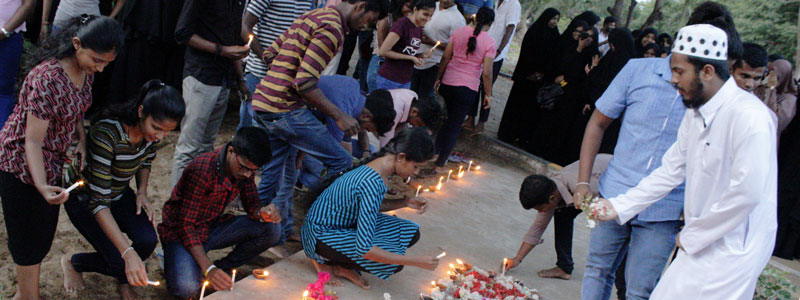
conversation with our Muslim friends. Together we agreed to hold a service of
remembrance for those caught up in the attacks.
To our surprise, over 250 students
from all ethnic and religious backgrounds gathered for the service. The Muslim
students thanked me for loving them unconditionally and for allowing them to
grieve with us.
A big dream for a broken people
Even in the midst of that great
tragedy, God found a way to begin the process of healing between our
communities in the university. It showed me that God is truly the great God who
can use even our weaknesses and tragedies to bring about his purposes.
In a country so divided, I see the
gospel of Jesus Christ as the only way in which all the communities can find
true healing and reconciliation with each other. I pray that our Christian
fellowship is a witness to that truth.