Energizing evangelism across Europe
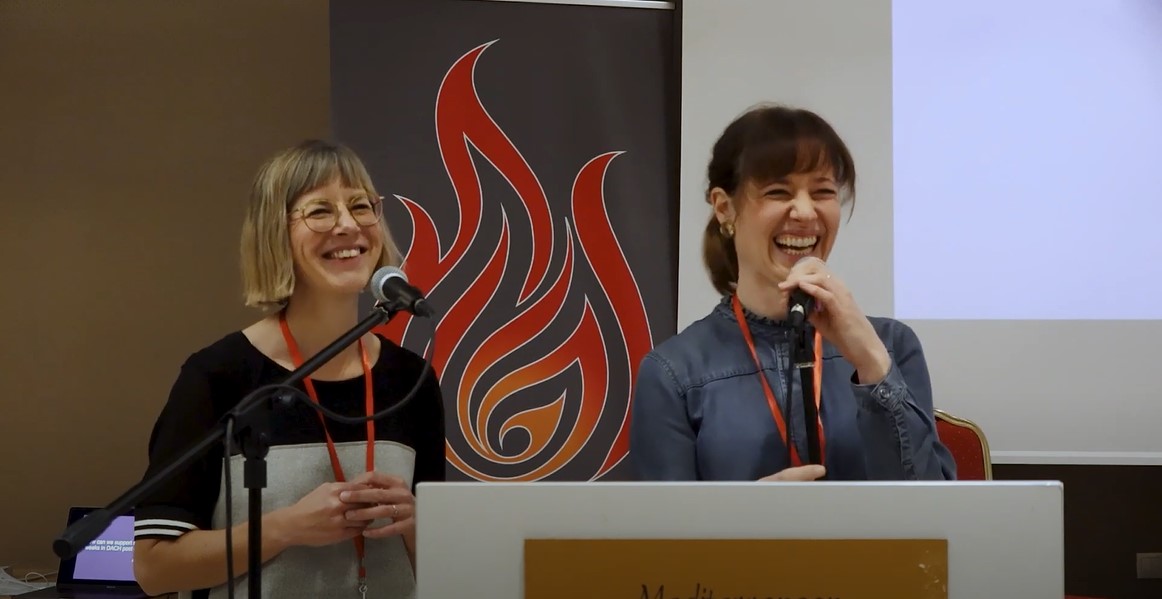
“We are living in a desperately tumultuous, uncertain time. The world is in crisis. We are facing a pivotal moment in western civilization,” says evangelist and author Becky Pippert. “If ever there was a time that the world needs to hear the good news of Jesus Christ, it is now. We must not fail to make a difference in this critical cultural moment.”

Becky Pippert addressed these remarks to 100 evangelists and 40 academics during a conference organized by FEUER, the Fellowship of Evangelists in the Universities of Europe, this past October.

In a post-pandemic context, amid rapid cultural shifts and the rise of “cancel culture”, sharing the gospel on European university campuses can be challenging. But when evangelists in IFES Europe’s FEUER network met in Greece late last year, they exchanged ideas and encouragement to equip and empower this mission. FEUER connects the national movements of IFES Europe with European evangelists committed to the public communication of the gospel in the region’s universities. These partnerships are crucial to the success of mission work in the region.

We come away with so many ideas to steal and adapt in our own context and people feel motivated to ‘give it a go’!

Michael Ots, field director for FEUER

“The courageous and creative approaches to public evangelism that we hear shared at our annual conferences are not just an encouragement – they are an inspiration,” says Michael Ots, field director for FEUER. “We come away with so many ideas to steal and adapt in our own context and people feel motivated to ‘give it a go’!”

Debates between Christians and famous atheists on YouTube, podcasts, book clubs and publishing projects were just a few of the diverse outreach ideas shared by members of this grassroots network during the recent conference. And many ideas have been shared and adapted between countries and student groups.

Reinvigorating student mission

“In a post-pandemic world, we have been exploring how we can rekindle the idea of evangelism in Christian Unions, some of which have never seen mission done before,” says Julia Garschagen, Director of the Pontes Institut. For her, the conference was a chance to update those present on how the Pontes Institut, in partnership with relevant IFES national movements, is building bridges among science, culture, and faith in Germany, Austria and Switzerland.

“We looked at the needs in these German-speaking student movements and realized that we needed to find students who are multipliers, people who have already seen and done mission and can bring along those who haven’t so that we can restart missions in many cities,” observes Julia.

Together with her colleague Heike Breitenstein, they have started a program called Proclama (Proclaim), which trains students and recent graduates in theology, apologetics, and communication skills, equipping them for public evangelism. It’s an idea they have borrowed from a similar program run by GBU Spain and the Spanish apologetics institute, Instituo Pontea — a program they heard about during a previous FEUER conference. “We have just started our third cohort of Proclama students and this year we have eight students from Germany, Austria, and Switzerland,” Julia reports. “It is really encouraging because often the students who do Proclama are the ones who get student groups excited to do mission weeks. They are able to give evangelistic talks themselves and train other students in how to do personal evangelism.”

Julia also shared news of an event focusing on a new style of evangelistic dialogue being used in German-speaking IFES movements.

“We’ve found that a lot of postmodern students want to experience and explore the gospel for themselves,” she says. “They have a more existential approach, so we have been trying to introduce a dialogue model of evangelism that gets people engaged with a biblical text while also discussing an existential topic, for example ‘I have a full calendar and an empty soul: how do I find fulfilment?’”

This type of engagement is already bearing fruit in the east of Germany, one of the most unchurched regions in Europe.

“I was recently in Rostok, in the far northeast region of Germany,” shares Julia, “it’s the kind of place where there are a lot of atheists. You can meet people there who have never heard the name of Jesus. But this also gives you the opportunity to open the Bible without a lot of prejudice because many people there have never seen one before.” She recalls leading one event where “there was a student who prayed the prayer and gave his life to Jesus. We don’t see this very often, so this was a real day of celebration for us.”

The word on fire

FEUER may be an acronym, but it is also the German word for fire (pronounced foy-yehr). It was Dr Martyn Lloyd Jones, the first chairman of IFES, who described preaching as ‘logic on fire’. FEUER was established in 2008 to spark an increase in the public proclamation of the gospel throughout European universities. At the time, university “mission weeks” occurred regularly in less than five countries in the region.

Mission weeks are a special series of events during which the gospel is proclaimed publicly and persuasively. This single, intense experience is a point of culmination for the ongoing personal witness of Christian students throughout the year as well as a catalyst for further witness.

Over the last 15 years, FEUER has grown into a network of grassroots evangelists from 40 countries. The Lord has used this network to help many Christians rediscover a confidence in the public proclamation of the gospel. As a result, university mission weeks have been pioneered in 36 countries, regular mission weeks take place in approximately 25 of those countries, and many thousands of students have heard the gospel.

Take what you learn and make it your own

Nonetheless, there are still countries and cities where the idea of hosting a mission week is an unfamiliar concept.

“I hadn’t really even known what a mission week was when I attended my first FEUER conference,” says Nico Villanen from Finland, who was a student when he first attended the conference two years ago. “We heard that mission weeks are an amazing concept, but we hadn’t seen it in practice, so a friend and I attended the mission week planning course at the conference.”

Nico, presently a staff worker with HSSM, the Swedish-speaking IFES movement in Helsinki, shared how his student group organized the first ever mission week in that city last April.

“We were so blessed because on the first event of our mission week, there was one girl who accepted Jesus as her Lord and Saviour,” remembers Nico. “At that moment, we thought, ‘wow, if this is the peak and if nothing else happens this week, this is enough!’

“It was not only for the non-Christians that our event was successful, but also for the Christians in our city. We’d had a mission week prior to this, many years ago in a different city, but it was a total flop. The Christian students who remembered that event were initially skeptical about our plans, but at the end of our mission week they came to us and said, ‘It actually works.’”

If there is one thing that those in the FEUER network know it is that there is no one-size-fits all when it comes to student evangelism.

Nico came to understand this during his mission week last April: “We learned that free lunch events don’t work in our context because university lunches are heavily subsidized here. Next time we will probably do a café event with baked goods and coffee instead. My advice is to take what you have learned and make it your own.”

“Many of the ideas shared in FEUER are unique to a particular context,” acknowledges Michael Ots. “But behind the practice there are principles that we can all learn to apply in our setting, for example the importance of prayer, publicity, creativity, and follow up. Often people get inspired by a particular idea and then learn to adapt it to their own context.”

More than a conference

Beyond its annual conference, the FEUER network is comprised of diverse individuals who stay in touch throughout the year and collaborate on mission weeks. Some members of FEUER are IFES staff and students; others work for churches, Christian organizations, universities, or in a variety of secular workplaces. The network mostly includes people who are involved in delivering evangelistic talks – or are interested in doing so – but it includes mission organizers too.

FEUER now has a parallel network for academic speakers wanting to bear witness to Christ from inside the university while partnering with public evangelists. Additionally, FEUER has started a Seeker Bible Study Network to encourage small group and personal evangelism that complements public proclamation.

“When I travel to meet the leaders of national movements and ask them about their biggest encouragements, I am amazed at the number of times FEUER is mentioned,” says David Montgomery, Regional Secretary for IFES Europe.
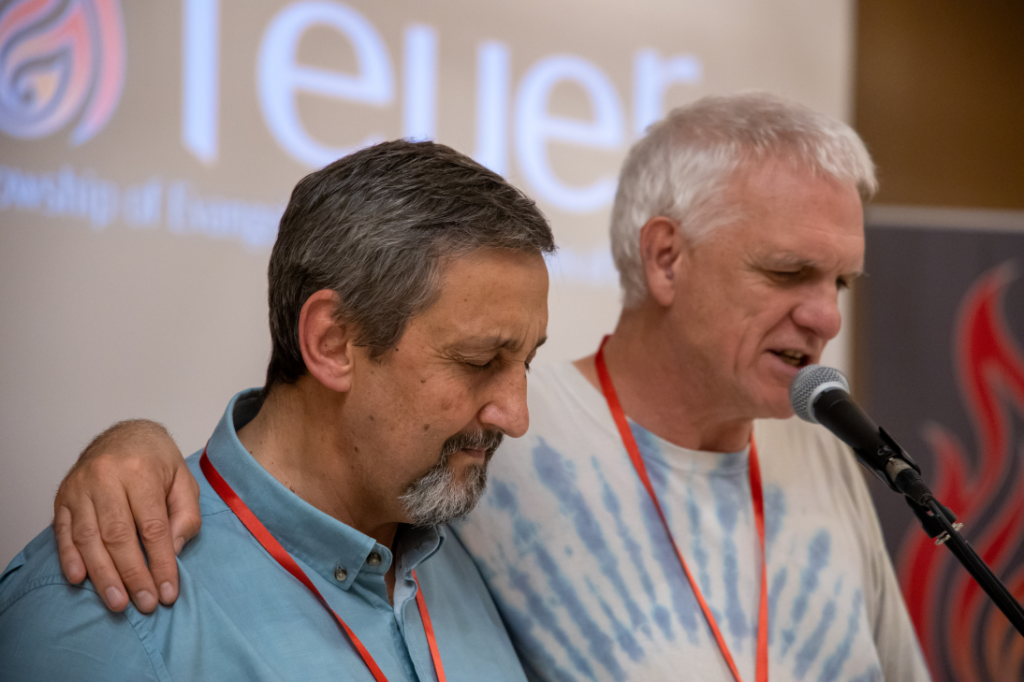
“Many of those who have come to faith in recent years in our region have done so through events inspired by FEUER. We want to make the training and mentoring of young evangelists a priority in the years ahead.”

Videos from the plenary sessions at the recent FEUER conference as well as other helpful evangelism resources can be found on the FEUER website.

If you are involved in the public proclamation of the gospel in universities in Europe or if this is an area that you are keen to explore, contact Michael Ots to find out more: Michael.ots@ifeseurope.org. The next FEUER conference will be held November 2-6 in Spain.

The God of being broken

“God puts great value on broken people.”

This is how Lydia is praising God for the way he is working in ZVEŠ, the national movement in Slovenia. Originally from the UK, Lydia has been a ZVEŠ staff worker for ten years, which she hasn’t found easy. After a recent season of real personal discouragement, “feeling confused, lost, and disappointed that God didn’t help me as I thought he should”, she now shares her renewed faith in a God who loves to turn our brokenness for good. She is “striving to find my encouragement in God and keep my eyes focused on Jesus. Please pray that I would not depend on myself, but stay humble and dependent on him”.

Though student ministry can be challenging with only a 0.1% evangelical Christian population in Slovenia, God is providing blessings. The ZVEŠ discussion group for international students has had a great start to the new academic year, and half of those attending are not yet Christians.

Lydia has a new apartment in a great location in Ljubljana, where she recently hosted an open house to welcome students. Some are very enthusiastic about meeting together to study the Bible, while others are very unsure about their faith. Lydia wants to encourage them to think about reaching out, without alienating those who need a safe, nurturing environment to explore knowing Jesus for themselves on a more fundamental level.

Let’s pray for Lydia and ZVEŠ Slovenia:

  • Pray that God would continue to uplift Lydia spiritually and give her the confidence that God is able to bless her “abundantly, so that in all things at all times, having all that she needs, she will abound in every good work” (2 Corinthians 9:8).
  • Pray that God would sustain the ZVEŠ team more generally through various health problems. As Lydia says, “we have no idea how this year will go, but pray that through God’s grace he would use the little we can do and multiply it.”
  • Pray that God would continue to work in the lives of the students who are part of ZVEŠ, speaking to them, and meeting them wherever they are and drawing them more and more into a knowledge and deep assurance of the love of Jesus for them and truth and power of the gospel.

Thank you for supporting ZVEŠ Slovenia in prayer. If you feel led to contribute to their movement financially, you can do so here.

If you’d like to hear more from Lydia, sign up to her newsletter on the UFM website here.

In the midst of the darkness (Part Two)

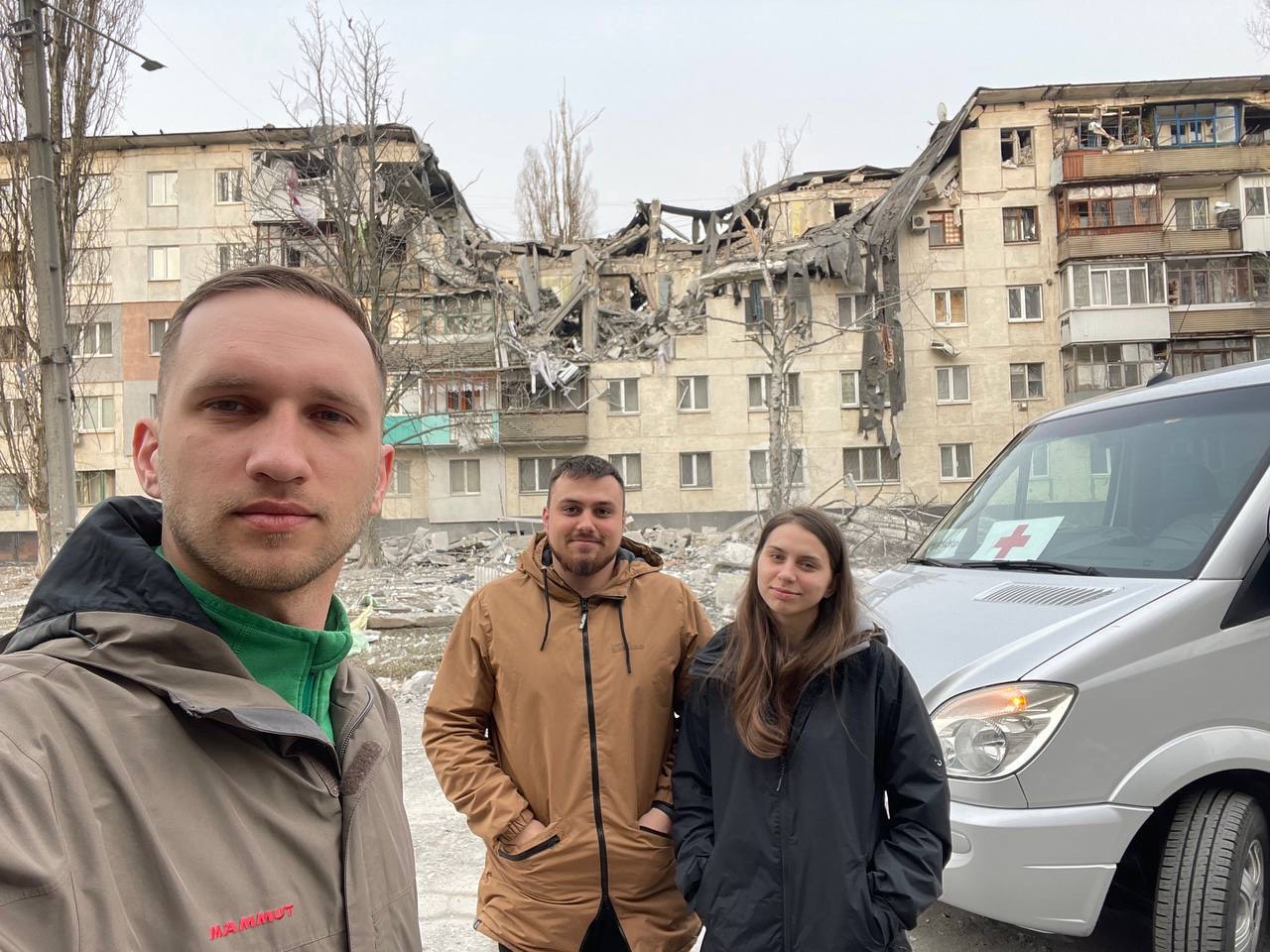
The war in Ukraine has impacted the work of IFES on a number of levels. In this special two-part edition of Conexión, we share first-hand accounts of how, even in the midst of the darkness of war, God is working. Here you can read perspectives from IFES students, staff, and graduates in surrounding countries affected by the war, and the role the fellowship has played in providing support. You can read Part One, which features first-hand accounts from Ukraine and Russia, here.

Vera, Poland: ‘God answers quickly and gives abundantly.’ 

For ChSA Poland staff worker Vera, the war in Ukraine initially presented her with a dilemma. When news of it came, she was attending a youth conference with some Belarusian students when the news came. One student left immediately to drive to the border and pick up friends. Vera wondered – should she also jump in the car and race down to Ukraine?  

As it turned out, she didn’t need to.  As the coming months showed, God had different plans. Vera was born in Russia, but her family relocated to Canada when she was a child. Later, Vera served with InterVarsity Canada before moving to Świdnica, Poland. This background prepared her perfectly to make a difference in the crisis that unfolded after Ukraine’s invasion.  

When Vera returned home to Świdnica from the conference, she was surprised to find Ukrainians already in her town.  Using her Canadian connections, Vera and her husband Konrad began fundraising for refugee accommodation with their church. Generous friends gave over four times what Vera requested. Consequently, they were able to open seven rooms, with an overflow space housing 25-30 people in the church hostel. There was so much money left they even rented a seven-bedroom house, which is currently a haven for 15 people.  

“The way God provided finances was really amazing,” says Vera. “The account would get close to zero, and then more funds would come from places we weren’t expecting. Similarly, while we looked into renting small apartments, I prayed for the house that I envisioned – big and empty, with light and a garden. The next day, a house exactly like this became available. We prayed specific prayers, and God answered quickly and gave abundantly.” 

As she recounts her experience, Vera emphasises the mutually fulfilling relationships she has developed with these refugees. “I’m expecting a baby and many of them have given me presents, like baby clothes. Because I speak Russian, it’s a friendly dynamic, not a ‘we’re helping you’ dynamic. We’re trying to start a little business on Etsy to create jobs.” The contribution of refugees is also significant in other ways: “It’s been incredible to see how the churches and youth groups have grown. It’s a huge gift to the church in Poland to receive so many people with different experiences. As we give to them, so too we receive a lot from our Ukrainian brothers and sisters.” 

This has also been the story for ChSA. While they’ve sent two trucks of supplies to CCX and assisted with temporary residence applications. they also emphasise that the refugees from Ukraine and elsewhere are beginning something new. In Warsaw, there are many young men from Belarus who have escaped from the risk of conscription. There, a staff worker (himself from Belarus) has been meeting with Belarusian and Russian-speaking students – including non-Christian students.  

“God is using this horrible situation to begin something in Poland,” explains Vera. “So, we need to remember why we’re doing this. A lot of people have reached their limits and they’re tired. Pray for people to come to Jesus. Pray for openness, and for vision to see the opportunities.” 

Adelina, Romania: ‘Meeting the Ukrainian people made me realise that the only solution is Jesus.’ 

Suceava, the city where Adelina is a student, is in northern Romania, close to Ukraine’s southern border. In the first week of the war, 42,000 refugees came to the city. Since then, over a million have entered Romania and, of these, around 85,000 have decided to stay. “It all began very suddenly,” Adelina remembers. “I wanted to help, but there was one big barrier. I didn’t know Ukrainian, and they didn’t know English or Romanian. What could I do? 

“I struggled a lot. I saw everybody trying to give food and clothing. But I felt they weren’t addressing the soul, the trauma people had been through.” Adelina has met many people devastated by war: “kids with no parents, single parents, and old people, with no hope and no direction.” There is one encounter that stays with her. “I met a lady who was really scared and in pain. I asked what I could do to help her. But she just looked at me with tears in her eyes and said ‘unfortunately, there is nothing you can do to help me’. My breathing stopped and I felt a pain in my chest. I felt powerless – everything felt pointless.” 

Adelina’s experience of the war has been defined by “moments of unrest, questioning, and feeling overwhelmed.” But it has made other things more certain for her. “Meeting the Ukrainian people and hearing their stories, I realise that the only solution for our lives is Jesus.” 

There have been occasions when the love and hope of Jesus shines through especially brightly. “There were some people who couldn’t explain for themselves how we were able to do so much for them, how we could open our hearts and hands for them,” Adelina says. “I can define my experience with the word ‘hope’. When nothing makes sense, when it hurts, if God is our Father there is hope in his promises no matter the circumstances.” 

Igors, Latvia: ‘There is no space for atheism in Ukraine’. 

Igors is Secretary of Staff and Team Development within IFES. Previously he was part of the IFES Europe team, and before that he was General Secretary of LKSB, the national student movement in Latvia. Since the war began, his primary involvement has been to support Ukrainian staff. However, with roughly 30,000 Ukrainian refugees in Latvia, Igors’ wife, Nora, a LKSB board member, has had a significant role in coordinating help for these displaced people.  In Riga, a group of churches have joined together as the Baltic Global Initiative. Working with a church in Chelm, Poland, near the Ukrainian border, they have coordinated deliveries, helped refugees get to Latvia, and connected them with local communities. Latvia is a relatively uncomplicated place for Ukrainians because the two nations share a Soviet heritage. Many older Latvians speak Russian and, in Riga, Ukrainian-language schools and kindergartens still operate.  

In addition to his work at IFES, Igors is involved with the Baltic Pastoral Institute (BPI). From the outset of war, BPI students have been going to Ukraine. As Igors explains, they are eager to help because “many Latvians resonate with the experience of war from our own history.” It’s been powerful. One student said that he couldn’t recall ever having a more vivid sense of God’s presence. “The closer you go in the darkness, the stronger you feel God’s presence. It’s illogical.” Similarly, a Ukrainian told Igors that “there’s no more space in Ukraine for atheism. You need to believe in hell and heaven.” 

It’s interesting, says Igors, “because you wouldn’t think that this would be the result. But if there’s no judgement, it’s hard to face the ongoing evil, and without heaven there’s no hope. It’s raised questions of good and evil. And I can almost see the whole nation going on this spiritual journey.” 

How can we pray? “Everybody is tired,” says Igors. “For Ukrainians as well, we all feel like marathon runners, facing another phase. Collectively, we need to redefine what we’re fighting for. Pray for more strength.”

Olena and Clinton, Ukraine: ‘miraculous delivery’. 

Olena, the IFES Head of Global Resource Ministries, is from Kyiv. She helped evacuate international students during the first few weeks of the war. “Some students were simply paralysed by the fact that there is a war,” she recalls. “They needed encouragement and logistical guidance. Some were stuck in basements without food or water. When their phones were charged and internet worked, I stayed in touch, assuring them that assistance is coming. God was in the middle of it all. He connected me with local pastors and representatives of international NGOs like the UN’s International Organisation for Migration (IOM), to join forces in helping students evacuate. It was teamwork at its best.”  

For those students, the initial ordeal is over. All were evacuated safely, and as Olena adds, “miraculously.” One evacuee, named Clinton, says that his “very existence is a huge testimony. I have seen, and still see God working in my life. From the time the invasion started until now, God in his glory has made every passage smooth for me. He has showered me with his infinite love and protection, giving me the courage and strength to forge ahead.” 

This doesn’t mean that things have been easy. “It was a traumatic, lonely experience. I don’t want to think about it.” Clinton travelled for three days to the IOM office outside Kyiv, where they assisted him in getting to Poland. There, he has resumed his studies. “Pray for me, for divine protection, provision, and comfort,” he asks. “And above all, let me not depart from God’s presence. Because I understand that without him, I am empty.” 
 

Audrey: ‘How God saved me out of Ukraine.’ 

“On 24 February everything had to stop. I never thought I would face war. All I did was stay inside and cry, until I no longer had words to tell God.”  

Audrey is from Tanga, Tanzania, where, for three years, she was a student with TAFES, the Tanzanian national movement. She had started a medical degree at Sumy State University, very close to the Russian border with Ukraine, when the war began.  

“I was looking for transport out of Sumy and communicating with Joan, a TAFES staff member. She linked me with Olena in Poland, who kept in touch with me throughout my journey from Sumy to Poltava, Lviv, Chop, Záhony, Budapest, and, finally, to Tanzania. She always asked if I needed any support and made sure that I was safe.”  

While Olena could offer practical support, Audrey adds that “TAFES were with me in prayer until I got to Poltava on 7 March. I saw miracles through it. All I can say is thank you CCX and TAFES. Stay faithful and believe our almighty God. I hope that through my testimony people will learn the goodness of our Lord.” 

Nay: Responding like a family 

Nay, from the IFES Europe team, has played a significant role in coordinating the IFES response to this war, in Europe and beyond. “We’ve been amazed,” she says, reflecting on how people have assisted with these efforts. Nay has also called on people to unite in prayer. “We started Whatsapp prayer groups in English and French, which have 1200 people from across the world committed to sustained prayer. We’ve run weekly Instagram Live interviews, and a monthly online prayer meeting. Supporters, staff, and students have given to the emergency funds – totalling around USD 300,000.” 

As well as facilitating prayer support, Nay is coordinating pockets of hospitality across Europe. What began as informal arrangements for the friends of Ukrainian and Belarusian staff has developed into a wider, joint effort with Langham and UFM called Ukraine Connect. “It has been amazing to see how IFES has responded,” she says. “Like a family.” 

Engaging our studies with the problems around us

This edition of Prayerline was adapted from GBEU Switzerland’s A Propos magazine. Sébastien, third year Civil Engineering student with GBEU, the Francophone student movement in Switzerland, writes about his experience of engaging the university. Find out more about IFES Engaging the University here.  

‘At a recent training event, I was part of a focus group on the topic of engaging the university. We highlighted the importance of being witnesses for Christ to our friends by engaging in community life. Recently, I had the opportunity to experience this in a very practical way. I organised an event with one of my teachers at the engineering school to challenge students about their role in society. Together we watched a documentary about ethics, followed by a panel discussion with speakers from diverse backgrounds. They shared their ideas and experiences about social and environmental issues, and the impact that engineers can have in society— a huge topic!  

‘After the formal part of the event was over, I had the opportunity to talk at length with the young teacher with whom I organised the event, as well as with another young, curious colleague. I testified about my faith openly. In cases where they viewed the problems of worldly sin as coming from a corrupt and wicked elite, I was able to speak of the sin which is in all our hearts. Where political ideologies might be seen as the answer, I was able to speak of salvation and the resulting transformation of the heart. Where the human being is singled out as the one responsible for solving these problems, I was able to talk of a compassionate God who accomplishes everything by grace and invites us to meet him. And where fatalism brings fear and uncertainty, I was able to speak of the hope of knowing that God holds all things in his hands. It was an extraordinary moment of exchange which continued well into the night, even though it was a Thursday evening! 

‘This was also possible because of the spirit of availability of two friends from the Pérolles GBU group who came to lend a hand with the tidying up. What a pleasure to serve God and contribute together to the life of our campus! As a follow-up to this event, we are planning to create a society for students committed to social justice. This would be the first student association at my university, so an opportunity to open up the social life of the university, as well as bring the gospel to the eyes and ears of new students. 

‘As a Christian I believe that I can agree with my non-Christian friends about the societal problems that surround us, but that I can also bring a unique perspective to the cause of these problems and, especially, to their solutions. What a privilege to be part of God’s work! To him be all the glory.’ 

Pray for Sébastien and GBEU Switzerland: 

  • Pray for those with whom Sébastien spoke – that his words would have an impact, give them a new perspective, and bring them to Christ. 
  • Pray for the plans to start a new student society centred around social justice. Pray that this new group would bring glory to God and much good to the world around them. 
  • Pray for students in GBEU and beyond as they seek to engage in the issues that matter, participate in the life of the university, and bring the light of the gospel. 

New beginnings in Cluj

Delia knows from experience how hard being a Christian at university can be. ‘In my first year’, she says, ‘it was hard to find a Christian community, and I used to travel home each weekend’. Things changed when she found OSCER, Romania’s student movement. ‘Meeting other Christian students and learning together how to be salt and light was a great help for me and had a big impact on my faith.’ When she moved to Cluj for her master’s degree in 2018, she found no OSCER group. But she had a burden for students – ‘I really wanted the students in Cluj to receive the help I also received back in my university years.’

How do you start something from nothing, single-handedly?

Delia met two others who shared her vision, including one who had moved to Cluj for the very purpose of starting a student group there. They began praying together, but as time wore on, nothing much was achieved. Then the pandemic hit. The three would-be pioneers had to return to their home cities.

At the end of 2020, Delia found herself the only one of the three whose plans aligned with a return to Cluj. She began to doubt her abilities. ‘It was hard, discouraging, and from my perspective, impossible’. She began living in Cluj with Raluca, a student from church. ‘As our friendship grew,’ explains Delia, ‘I shared with her my experiences with OSCER and my dream for the group in Cluj. One day, she told me that if I was afraid to do it alone, we could try and do it together.’

This was the moment things began to change.

Delia and Raluca shared their vision with their pastor, and two other students at church, Alexandra and Ana, were interested. Their first meeting was in March 2021. Studying the Five Thresholds course (produced by InterVarsity, the USA student movement), other students came and went over the weeks, leaving just the four. But they didn’t give up. In October, with the help of other missionaries, they were able to organise a big event with a well-known guest speaker. This time, about 100 young people attended, heard the gospel, and were invited to OSCER groups.

Weekly meetings have grown to 15-20 students. The Christmas outreach event showed a real spiritual appetite amongst students in Cluj, who asked great questions and wanted more discussion. After the exam period is over next month, the team plan to run the Alpha course.

‘This is the first time we are part of a coordinating team, and there are a lot of things to learn’, shares Delia. ‘Especially how to organise all our other responsibilities with OSCER.’ She’s nonetheless excited about the future – ‘Cluj is a big city and there are a lot of opportunities. We are very thankful for the way God has worked this year – and grateful for this opportunity to share our joy with you in Prayerline.’

Pray for Delia, Raluca, Ale, Ana, and OSCER Romania:

  • Pray that many students would come back after exams bringing their friends to Alpha. Pray that the planned outreach event in a few months would reach new students. Pray that students would give their lives to Jesus.
  • Pray that Christian students attending the group would embrace the vision of OSCER.
  • Pray that Delia, Raluca, Ale, Ana, and other Christians in Cluj would not grow weary of doing good (Galatians 6:9). Pray for wisdom and joy as they lead.
  • Pray for the long-term establishment of a student group in Cluj, with the development of the next generation of student leaders. Pray that this would have a long-lasting strategic impact for the kingdom.
  • Pray that OSCER would continue to have this impact on students’ lives in Romania.

Confidence Grows in Greenhouses

Think about who does what in your student group, your movement, and the evangelistic outreach events at your church. Who speaks? Who is quiet? Who takes the initiative, and who follows?

Are there women who have the skill and the heart, but who don’t step forward?

A 2019 study demonstrated a considerable self-promotion gap between men and women, showing that men are far more comfortable than women at putting themselves forward. Even with the knowledge that they performed as well as men, women in the study consistently underestimated their own performance in comparison.

These trends can carry over into Christian communities, too. Churches can often focus their attention and enthusiasm for training on men, overlooking the vital contribution women can make in public evangelism. There are lots of women in our churches and student groups with the potential to enrich our ministry with their insights, perspective, ability and Christlike character, and who just need a bit more encouragement to step away from the sidelines, and into the full use of the gifts God has given them.

Let’s Do Something

Nay Dawson, previously a staff worker with UCCF, the UK national movement, (now Regional Training Coordinator for IFES Europe) noticed very few female public evangelists speaking at student events. Seeing how this inhibited the ability to connect with non-Christian students, she established Passion for Evangelism, an annual conference gathering women together to practice evangelistic speaking and receive mentorship and training. A Facebook group started to organise the conference quickly developed into a network of women supporting one another, including IFES students, staff, and numerous general secretaries of national movements. The network is open to those outside IFES also, broadening perspectives to include those keen to impact their churches and communities beyond the student world.

Nowadays, alongside the Facebook community, Passion for Evangelism has become streamlined into two separate initiatives. A termly online book club equips women by talking through helpful resources, as well as hosting a Q&A with the author, giving space to consider relevant topics and be discipled together. The Greenhouse Project is a five-week program giving women a chance to be mentored and trained in public evangelism. Three times a year, a new cohort will commit to producing evangelistic material and delivering it at student events, church events, or on social media. In its last cohort, 26 women from Europe and beyond used their Greenhouse projects to ponder and present on the theme of the incarnation. They are finding joy and confidence; Katerina is General Secretary of SEAM, the student movement in North Macedonia. She resolved to deliver the evangelistic talk at a Christmas student event herself this Christmas. She shared that after meeting with the Greenhouse project, ‘I have wings to fly’.

New Things Flourishing

In a greenhouse, plants that need a bit of extra warmth can flourish and grow; seeds can germinate, and tender shoots can grow sturdier. This is what the Greenhouse Project aims to do with the ability and confidence of women who may never have had the chance to develop these areas before. The church and student movements will have more vibrant, creative, Christ-glorifying evangelists who have a message to tell and can tell it well. They will also have new ways of telling it.

‘Social media is an open door for the gospel’, says Nay, ‘so we’re trying to encourage that.’ As some have written talks with nowhere to give them, it’s liberating to see them create their own opportunities on social media. The participants are also encouraged to be creative, and some have found it more intuitive to create music, video content, poetry, spoken word or storybooks than a talk – whatever will resonate most with their target audience in their own context and community.

Training female evangelists uncovers new ways of telling the gospel message in other ways, too. They can reach women with their issues, from a female perspective, in a way that men cannot. Having female evangelistic speakers can also offset the prejudices and preconceptions non-Christians might bring. Nay has even heard stories of British students who immediately dismissed an event upon seeing the identity of the speaker. If unbelievers who perceive Christianity to be oppressive and bigoted see men and women working together in evangelism, ‘one in Christ Jesus’ (Galatians 3:28), they will see the fruits of the Spirit, healing divisions of gender, and glorifying God.

Seedlings

For the first few months of 2022, the new cohort of women in the Greenhouse project will be preparing materials on the resurrection for Easter events, partnering with A Passion for Life, an evangelism training campaign in the UK. In the book club, they will be reading Ros Clarke’s 40 Women (2021).

Passion for Evangelism is an opportunity for students, staff and graduates to train in public evangelism, developing their gifts and trusting that the Lord will lead them to do wonderful things for him through their courage and confidence. The initiative is equipping and encouraging student leaders to have confidence to serve alongside their male counterparts, such as Kez, the third female president of the Cambridge Inter-Collegiate Christian Union in the UK. While Passion for Evangelism is an IFES Europe initiative, it is open to participants from all over the world, and participants from as far afield as Mexico have joined in. Additionally, the Greenhouse Project and book club are easy to multiply. Previous participants from Croatia and Germany are working to start Greenhouse projects in their own languages. Nay also hopes that a conference, such as the first one in 2019, can go ahead in 2023. This would give participants a long-awaited chance to meet and pursue training and mentoring in person.

It’s true that women are often less inclined, less comfortable, and less free to put themselves forward than men. But it doesn’t need to be that way. Let’s pray that our student groups would be places where everyone is encouraged to use their gifts to build God’s kingdom and for his glory.

If you’d like to get involved, you can find out more about the termly book club here, Greenhouse Project here, or the Passion for Evangelism Facebook group here. The Passion for Evangelism Instagram is here, where you can get in touch with any questions. Twitter is here. For more on women in the church, see the She Needs series on Nay’s blog for some insightful testimonies and perspectives.

Waiting for your friends

It is hard watching your friends reject the gospel repeatedly. But in his timing, God can open their eyes. José, a student at the University of Barcelona, recounts a surprising phone call he received from his classmate in the middle of the pandemic. 

“During my college years I often prayed for my friends and classmates. But many times, my prayers seemed to bear no fruit. Or at least the fruit did not come in the way that I expected. I was so frustrated by my friends’ refusals to attend evangelical events or activities with me. 

So, I was surprised when this year I got a call from my classmate Andrés. He had never shown any interest in Christianity, but suddenly he wanted to talk about faith. I discovered that he was not entirely opposed to God or the Bible but had turned away for various reasons. He had realized that it was time to get close to God again. 

So, I suggested that we start an Uncover Bible study. At the beginning, I was a bit nervous. Would his questions be too simple or too philosophical? But the Lord surprised me again. My classmate was very happy with the study. Andrés told me that the Uncover design and structure were particularly appealing to him, very different from what is usually associated with the “traditional” idea of Bible study. While the questions seemed simple at first, they led to much more complex discussions. 

By reading the gospel we discovered together the person of Jesus: who he is, his mission, and what he wants to tell us today. Thanks to the studies and their questions we were able to discuss how these passages challenge us and our lives. We also talked about current issues and our role as Christians in the modern world. We discussed topics like the meaning of life, our pursuit of happiness, and the constant preoccupation with pleasing and seeking fame. I thank God for granting me this opportunity to share his Word in such a practical way!” 

This week, pray for the students who are still waiting for their friends to become receptive to the gospel. 

  • Pray for the non-believing students whose world has been turned upside down during the pandemic. Pray that they would reach out to their Christian friends for answers. 
  • Pray for the Christian students who continue to walk with their nonbelieving friends, even when they reject the gospel. Pray that they would remain faithful in their witness and not lose hope for their friends. 
  • Pray for the Scripture Engagement ministry of IFES. It equips students like José to share Scripture with their friends in a way that is relevant, natural, and powerful. Pray that more students like Andrés will become captivated by the Word of God.  

Leading through the fog

When the future is uncertain, moving forward can feel like walking through a thick fog. In these situations, we are faced with a choice – to stay in one place, or to continue in faith. Like so many ministries, the Formación conference continued to mentor student leaders amid a foggy future.  

This Formación was unlike any other before. What once was a 10-day conference bringing students together from across Europe expanded into a 10-month online course with lectures and small groups meeting over Zoom.  

Many creative elements contributed to a thriving digital learning community of 67 students from 30 countries. But the objectives remained the same. The program encouraged participants to recognize their unique strengths and offered clarity about who God is, how he created them, and for what purpose. They examined their own cultures and how the gospel could answer needs within their unique contexts. And most pertinently, students learned how to lead in the midst of change and uncertainty. As one student expressed,  

“Even in critical times, even in the fog, serving God is possible, leading others is possible, preaching the Good News is possible!” 

Having just wrapped up the 2020-2021 cohort, the leadership team is assessing how this unusual year may change future Formacións. The new format proved that creating an international digital learning community is possible and has benefits. Pray for the Formación leadership team as they discuss the future of this important conference, and trust God to lead through the fog.  

  • Praise God for the digital tools he has provided to continue the Formación conference online. Thank him for the cross-cultural relationships among participants which have offered insight and inspiration for their ministries and leadership.  
  • Pray for the 67 students who have just finished Formación. Pray that they will use what they learned to serve their student groups and campuses. 
  • Pray for the Formación leadership team as they reflect on this previous cohort and plan for the next conference. Pray that God will give them wisdom to discern the best way to use what they have learned over the past year. 

Captivated by the Word of God

Six hours a day. Fifty-nine students. One gospel text. This is Mark Camp. 

For five days, students from Ukraine gathered in the Carpathian Mountains to explore the book of Mark. Some were skeptical about their ability to digest such a large portion of God’s Word over just a few days, but they would soon discover the richness of diving deep into a biblical text – and doing so together.  

Ukraine has seen many Mark Camps meeting at a regional level, but this was the first time that the camp had met nationally. The result surpassed the impact of all previous camps. A staff worker from Kharkiv shares, 

“Almost all the students cried, when they shared how God influenced them through this camp… I do not want to exaggerate, but I have not seen such unity and such action of the spirit at national projects until this camp. It was unbelievable! We came back transformed! For CCX Kharkiv it was a life-changing trip – we became a family.”  

Studying the text challenged the students to consider how they could align their lives more closely with God’s heart. Students repented of living like “Pharisees.” They reflected on how they could better love international students in their communities. Some realized that they needed to be baptized, and others began studying Scripture with nonbelievers after the camp finished.  

And those students who were unsure about studying the Bible for six hours a day? A staff member from Kyiv shares,  

“At the end of the camp, they could not contain their feelings at how much they had learned from the gospel of Mark. The mystery of the Kingdom of God, the parable of the sower, the authority and power of Jesus, the disciples. Students listed stories and conclusions that they remembered. Several students decided to continue reading the rest of Mark’s gospel after camp. Looking at the students, we rejoice as the Word of God changes and captivates them!” 

Praise God with us for the power of his Word and its influence on students throughout the world.  

  • Pray that the students who participated in this Mark Camp will continue to make Scripture a daily part of their lives.  
  • Pray that they will share what they learned with their friends, both Christian and non-Christian, and encourage others to join them in studying Scripture together.  
  • Thank God for the beautiful fellowship of this national Mark Camp and pray for others like it that happen around the world. 

Sara’s Return

Everyone left Knin. That is just what happened in a war-town with broken families and broken futures. Sara had gotten out and attended university in Zagreb, the capital of Croatia. And now, strangely, she wanted to return. 

Everybody thought she was crazy. Nobody ever returned to a place like Knin. But in her second year of university, Sara heard a voice telling her to go back. She questioned what she was hearing. After all, she had a great photography job, amazing friends, and was serving God by organizing events for students. Still, she couldn’t ignore the voice, so she started to pray.  

“I knew if that was His will, I would need to leave everything, even university, to go and follow His voice… I knew that step would keep my inner peace. So, I decided to trust Him. I graduated, left my university, friends, job, everything I had, and I moved back.” 

Once she did, things weren’t easy. Sara was lost, totally unsure of what she should do in Knin. But when she attended the Revive Europe conference, things got a little clearer.  

At Revive, Sara joined thousands of other students for worship, prayer, and teaching. Though she was a university student, Sara attended one seminar for teenagers so that she could better understand them. There a vision for a teenage ministry took shape in her mind. Over the rest of the conference, Sara heard God repeating the words “small things.”  

“He wanted me to do the small things for “big people”. He reminded me how he brought me from having nothing my first year of university to many opening doors… He showed me a new beginning and new start.” 

Sara returned to Knin after the conference and converted a room in her church into a “hang out” place where teenagers from the community could have a listening ear and be themselves. She planned games and even offered a free photography class. Soon, the teenagers felt like a small family.  

Sara said that she had always imagined herself going to Africa to work with children exploited as warriors. But as she looked around at her teen club one morning, God told her,  

“These are kids you need to fight for. Kids that survive in broken families, kids with unsafe homes, kids that lost themselves. These are your warrior kids.” 

Since COVID-19, things have been difficult for the group. The church has sold their building and Sara has struggled to find funds for the group’s activities. Sara still believes that God has a plan for the teenagers.  

“I am still fighting for them in my prayers until God provides a new, better way. The Revive conference reminded me of how great our God is. I also met a lot of amazing Christians who fight with me for those children. I could not ask for more!  …I can’t wait for the next Revive and for revival in my small town of Knin! Revival in hearts of many.” 

Pray with Sara for revival in Knin and Croatia. 

  • Pray for Sara’s group, that she would have the resources to continue. Pray that the teenagers she mentors will come into a life-changing relationship with Jesus. 
  • Pray for other students like Sara who attended Revive in 2019. This conference has inspired many students to create outreach projects in their communities and campuses. Pray for those who have stepped out in faith to do what God is calling them to do. 
  • Pray for revival in Europe.