

Life-giving Words
5 Ways to Echo the Eternal Word across Campus
Utter delight and complete destruction.
Isn’t it remarkable that both can be caused by the sounds we make with our mouths? That our words, whatever the language, can be that influential?
“The tongue has the power of life and death,” says Proverbs 18:21.
We know it. Our world is full of words that deceive, boast, and taunt – from lies in the family to cruelty in the group chat. So, when we hear words that liberate rather than humiliate, it’s beautiful:
Gracious words are a honeycomb, sweet to the soul and healing to the bones.
ENCOUNTERS WITH THE LIVING WORD
Perhaps it’s not surprising, then, that John starts his Gospel by describing Jesus as a good and gracious word. He’s the eternal Word that echoes across time and space, bringing life and light to all humanity.
But this cosmic Word is not abstract and lofty:
“The Word became flesh and made his dwelling among us.” (John 1:14)
The Word takes on a body, with skin and bones and hair and nails and blood. The Word lives and breathes – and speaks.
What does it look like to hear life-giving words from Jesus, the embodied, divine-human Word? John tells us.
In this Conexión blog, we reflect on five occasions in John’s Gospel when people with different needs encounter the life-giving Word. And we ask: how is student ministry echoing that voice today?
1 – LIFE-GIVING WORD TO THE RELIGIOUS
A life-giving word isn’t always comfortable.
When Pharisee Nicodemus visited Jesus for a late-night chat, Jesus discerned that the religious teacher’s understanding of God’s kingdom needed to be challenged (John 3:1-15).
“No one can see the kingdom of God unless they are born again,” Jesus said provocatively.
In the exchange that followed, Jesus gently but firmly challenged Nicodemus’ inherited beliefs, nudging him towards the true source of new life:
“The Son of Man must be lifted up, that everyone who believes may have eternal life in him.”
In many places where IFES works, Christianity is a majority religion, whether Catholic (e.g. Philippines and Poland), Orthodox (e.g. Greece and Russia), or Protestant (e.g. Papua New Guinea and Namibia). In such contexts, many students grow up knowing about Christ and the Bible. But few have meaningfully engaged with Scripture or encountered Jesus in a personal way.
A Prayer Card from this year’s World Student Day expresses the issue well:
“Most people in Vanuatu would say they are Christian. Please pray that God would bring students to a genuine understanding of the gospel.” (Bill)
This is why words that gently challenge the false security of cultural religion can awaken new life.
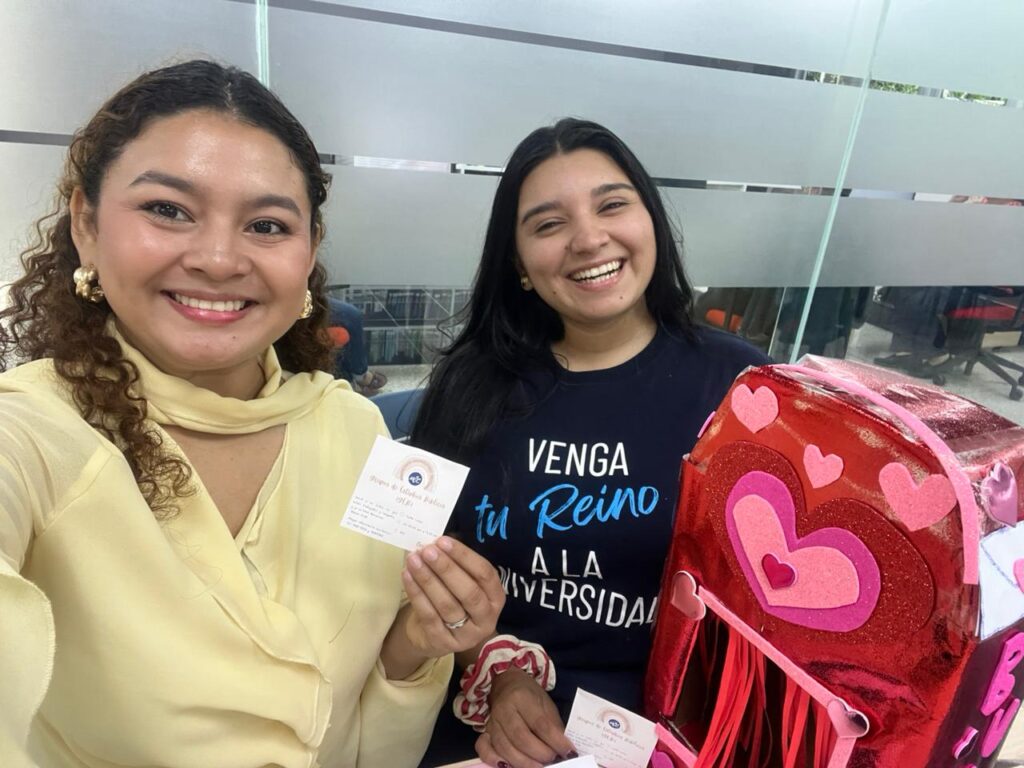
Earlier this year, Mayerlis and Sindy found creative ways to let the written word speak in their predominantly Christian context in El Salvador: for Valentine’s Day, they offered students “love letters” with love-filled Bible verses.
And in Madagascar, a conference talk on Job helped Egilson realise that his Christian upbringing and churchgoing were not enough: “I decided to really open my heart to know God.”
How can you lovingly challenge those who rely on religion to simply trust the one who was lifted up on a cross?
2 – LIFE-GIVING WORD TO THE THIRSTY
“Whoever drinks the water I give them will never thirst,” said Jesus to a thirsty Samaritan woman who’d come to draw water from Jacob’s well (John 4:14).
She understood him to be talking about liquid rather than spirit (compare John 7:36-37), so Jesus guided the dialogue in a different direction. His words helped her verbalise her deeper thirst – her longing for a Saviour (4:25).
Jesus had a way of offering life-giving words to people where they were, in the business of their daily lives, in the language of everyday conversation.
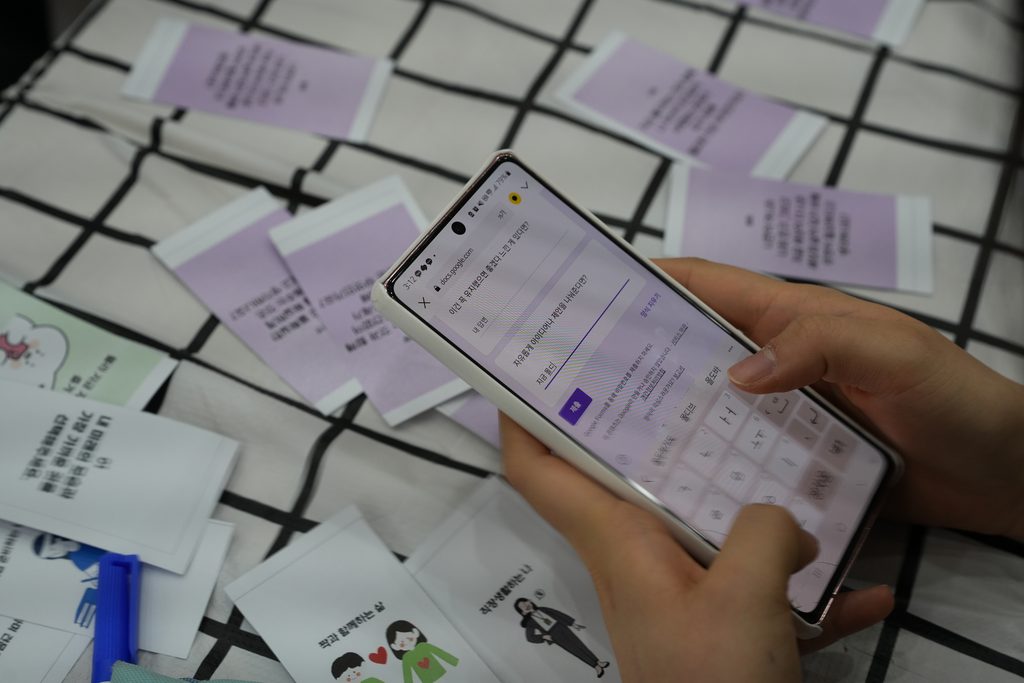
This is the kind of evangelism that IFES is supporting on campuses worldwide.
This year, we’ve been praying with IVF, the IFES movement in South Korea, for its endeavours to help students initiate relevant, everyday gospel conversations among their friends.
After Evangelism Camp in January:
“Students overcame their vague fears of evangelism. They started to put the gospel into language familiar to them – not as abstract dogma but as a love that’s shared through relationship.”
The camp also trialled the use of picture cards as an aid to sparking spiritual conversations.
Evangelism Camp will take place again in January 2027, and IVF ask us to pray for “outreach to new students from December through February – that many new students may be reached with the gospel”.
Elsewhere in East Asia, pioneering ministry in a sensitive country has been using its own “Jacob’s well” – a farm garden. It’s a safe space for friendly conversation with students wherever they’re at, for life-giving words to the thirsty.
How can your everyday conversations point towards our human thirst for spiritual life – and to the One who can quench it?
3 – LIFE-GIVING WORD TO THE DESPERATE
The royal official in John 4 would have had privileges and resources. Yet here he was in desperate need: death was closing in on his sick son (John 4:47).
When he heard that a man known as a miracle-worker was nearby, the one who was normally in command was prepared to beg. He pleaded with Jesus to visit his home to heal his son.
Jesus was the one in charge – he didn’t need to go and put on a miracle show for the people (4:48). His life-giving word from afar was enough:
“Go, your son will live.” (4:50)
No challenging Scriptures (like with Nicodemus). No spiritual metaphors (like with the Samaritan woman). Jesus simply responded to this man’s desperate need with a plain life-giving word that took immediate effect (4:51-53).
IFES movements serve students and campuses that face many needs. Sometimes the need is desperate.
In Sri Lanka, a Buddhist who had been learning more about Jesus through an online Bible study group was suddenly in a dire situation. Having been injured in a serious accident, he was facing life-changing surgery.
“God, if you are the true God, please heal me,” he prayed.
The next day, he was well. It stirred him to turn to the Jesus he’d been learning about in the Bible.
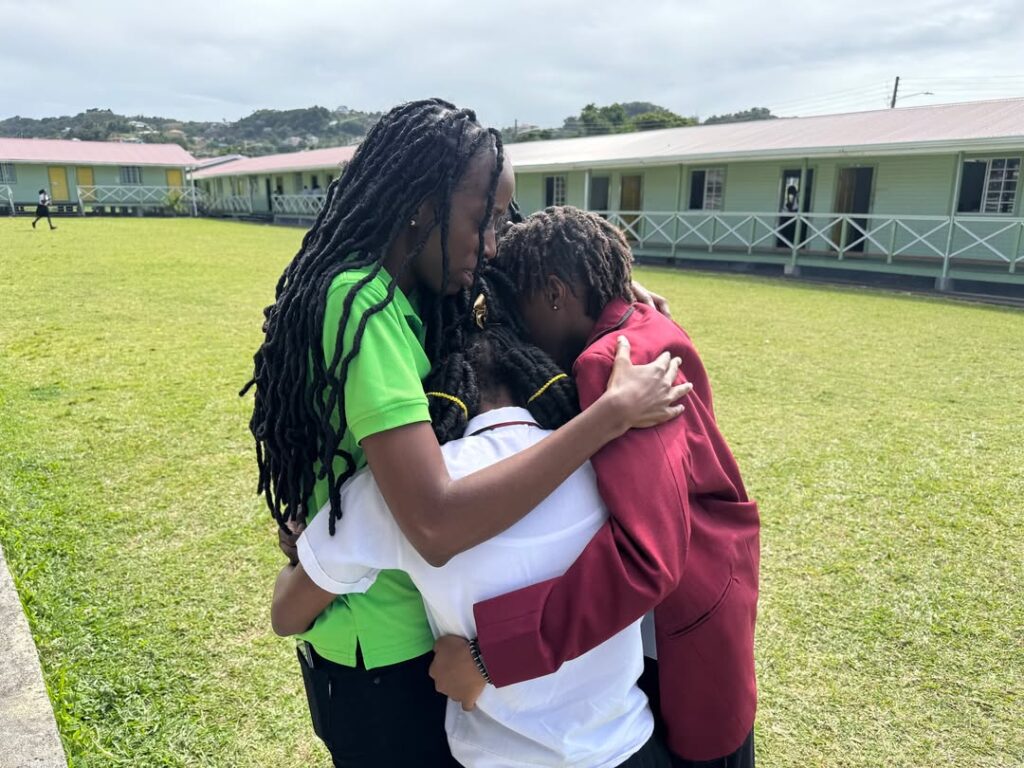
Elsewhere, the life-giving gospel has overcome the desperation caused by drug abuse and crippling anxiety.
From broken bodies to broken homes, the needs are many: Johanah asked us to pray for the situation in many families in the Cayman Islands:
“We lament the rapid divorce rates of students’ parents. Pray for unity and love in the household and pray against the influences that are tearing families apart.”
How can you bring life-giving words into the social, physical, and emotional needs around you?
4 – LIFE-GIVING WORD TO THE CURIOUS
“I am the light of the world” (John 9:5)
These were not just words.
Jesus, the incarnate Word, “fleshed out” the claim by bringing light to a blind man’s world (9:1, 6-7). It was an undeniable healing that triggered the religious authorities to conduct a heated – and illuminating – interrogation of the blind man and his parents (9:13-34).
But Jesus had a different kind of question for the man born blind. For, as light-giving as this healing was, the man’s need for light ran deeper than physical sight. The man was open to seeing God at work (9:30-33), so Jesus looked for him, found him, and asked:
“Do you believe in the Son of Man?”
With this question, Jesus opened a conversation that enabled the healed man to see him as the light of the world and worship him (9:35-38).
IFES movements are meeting students who are on the journey represented in John 9. In a sensitive country in Eurasia, responses to life-giving words at Mission Weeks ranged from initial curiosity to deeper interest to heartfelt belief.
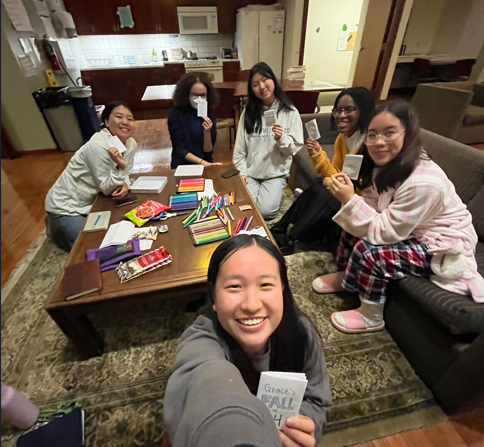
In North America, Grace shared life-giving words in her ongoing conversations with classmate Ashley.
She saw her new friend move all the way from openness to interest to worship, with Ashley’s final step coming from her low-key but clear invitation.
And students in the IFES movement in Austria recently launched a group at the Vienna University of Economics and Business. “Thank God for the openness of the students,” they reported after an outreach event.
Who are the curious around you? What life-giving words would help them move from an open mind to a heart full of worship?
5 – LIFE-GIVING WORD TO THE BELIEVING
Mary, Martha, and Lazarus had a close relationship with Jesus (John 11:1-3).
So, when Lazarus fell ill and died, the sisters’ raw reaction is understandable – both believed that Jesus could have saved him from the grave (11:21,32).
We know that their faith was vindicated. Jesus revived Lazarus with a life-giving word that was – like his word to the royal official – a simple command (11:43). But, before that, a conversation with Martha was needed (11:23-27).
In it, Jesus said to her:
“I am the resurrection and the life… Do you believe this?” (11:25-26)
It’s not just unbelievers who need life-giving words.
Martha needed to draw on the trust she’d placed in Jesus. She needed to recalibrate around him her good theology about resurrection (11:23-24). She needed to put all her hope in Jesus as the Saviour of the world (11:27).
Across IFES, many believing students need life-giving words. Like Martha, they too know and trust Jesus but face confusing situations of pain and loss.
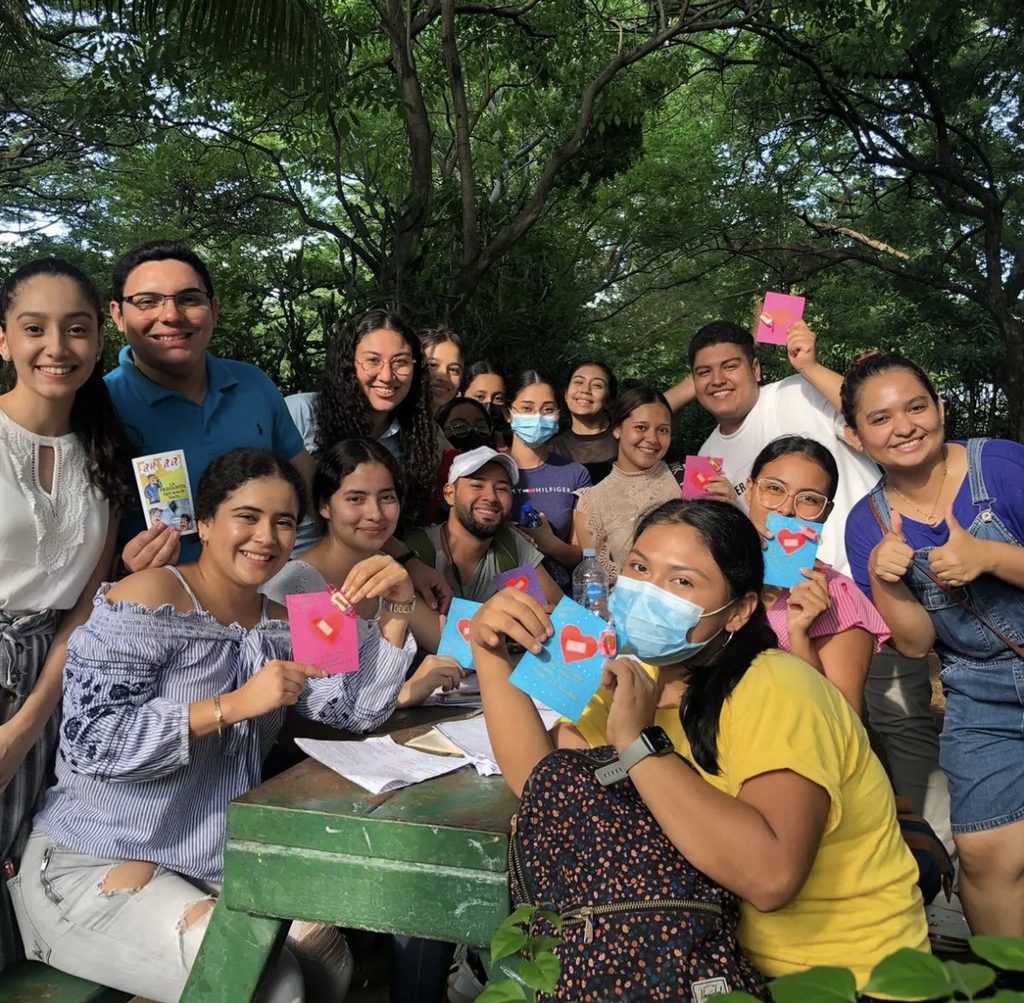
These two World Student Day Prayer Cards come from contexts where the life-giving encouragement that IFES groups bring is vital:
“Pray that Burkinabè students, many of whom have been affected by insecurity and displacement, will continue to be agents of hope and reconciliation in their country and on their campuses.” (Dieudonné in Burkina Faso)
“Let us pray that God will open up paths where we cannot yet see them and give us the insight to recognise where he is already at work.” (Daniela in Nicaragua)
How can you offer life-giving words to believers who are facing hard times? Do you have some words of encouragement to share with IFES staff and students around the world? Share them here.
ECHOING THE LIFE-GIVING WORD TODAY
These five occasions show how Jesus – the Word-made-flesh – spoke life-giving words to different people with different needs in different situations:
To a religious scholar searching for truth. To a thirsty outsider longing for life. To a desperate official seeking help. To a curious witness wanting to believe. To a mourning friend looking for hope.
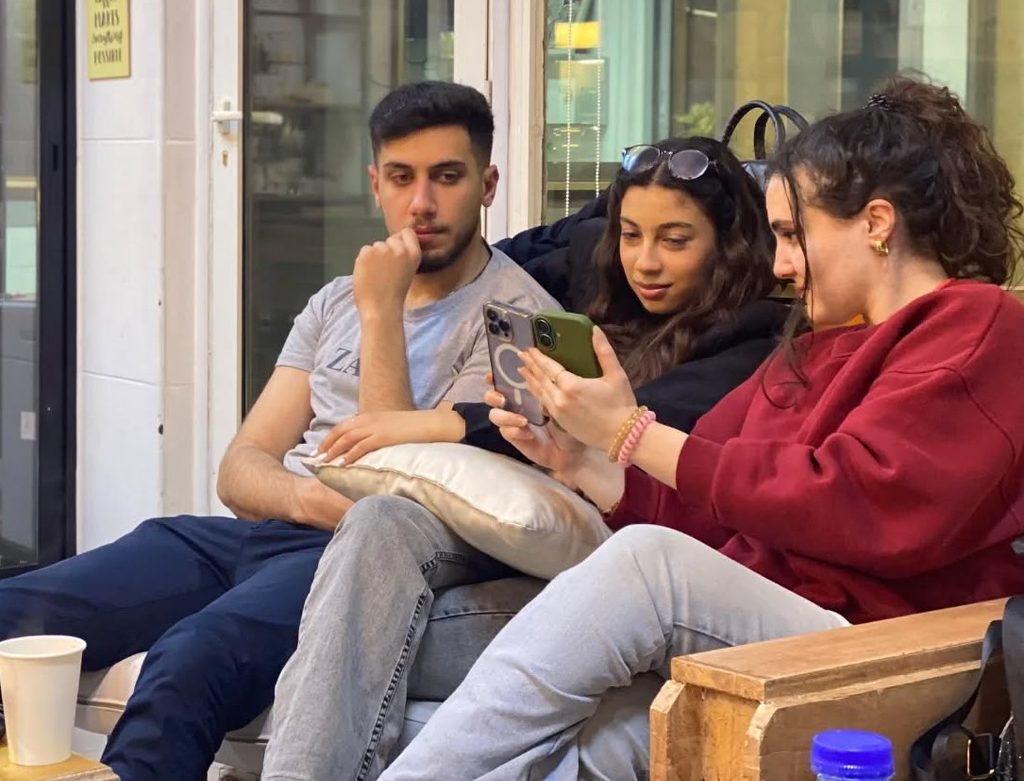
And though his words were unique – for he was the Word, “the One and Only Son” (1:14) – we saw how his life-giving words can still echo through us, his body on earth today.
How vital this is for today’s students.
Besides the millions of words they will hear and read during their studies, they will face millions more online – including false ideas, negative news stories, and caustic comments.
Thank God that through student ministry they can experience words that are like honeycomb, “sweet to the soul and healing to the bones”.
Let’s cause utter delight on the world’s campuses.
Let’s keep echoing the life-giving words of Jesus to the religious, the thirsty, the desperate, the curious, and the believing.


