
THE BEAUTIFUL GAME IN A BROKEN WORLD
Talking World Cup on Campus
Pelé called it “the beautiful game”.
But what’s God’s view on it?
What does the Bible say about football (soccer), the multi-billion dollar sport that’s dominated news globally over the last few weeks thanks to the FIFA World Cup?
The Bible says very little – directly.
The only clear appearance of a ball is when an arrogant palace administrator is told he’ll be dealt with like garbage that’s screwed up into a ball and thrown away (sadly, not kicked) (Isaiah 22:18). And while there’s talk of lifting up a cup (Psalm 116:13), it’s not a golden trophy.
Of course, most contemporary concerns could not have been directly named when scribes put pen to papyrus. But we still believe that God’s Word addresses every issue in our world.
WORD AND WORLD
That’s why a recent IFES Word & World webinar proved “a timely conversation on football, justice, and the gospel” – with three sports enthusiasts from the IFES family:
Joan Mwangi served as a staff worker in TAFES Tanzania and is now working for St Columba’s church in Dar es Salaam. Queenie Serrano is National Director of Global Justice Programs at InterVarsity/USA. And Roberto Carbajal is the head of COMPA Mexico’s national office.
Naturally, some talk of players and teams occurred. Messi! Morocco!
But the conversation mostly focused on the World Cup as a phenomenon and the issues that come with it – and how we should respond as followers of Jesus.
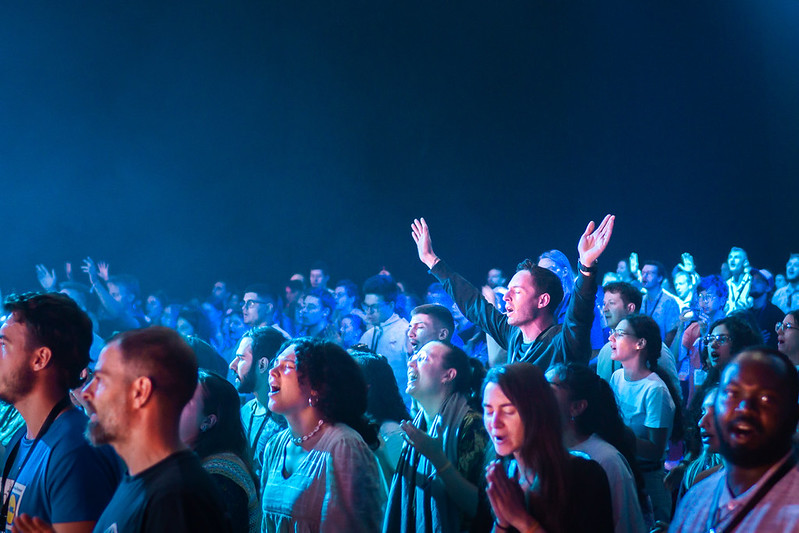
A common thread emerged. It was clear that the World Cup is an event that brings both delight and pain. It’s a place where goodness and evil are present.
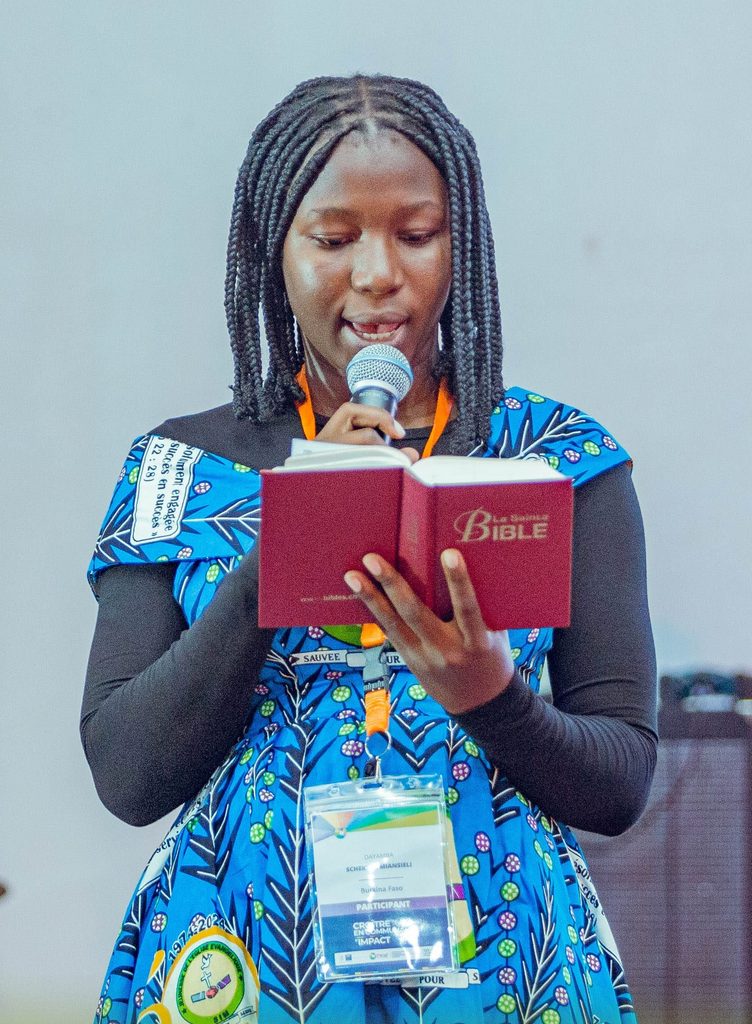
In that sense, it powerfully connects with the beauty and brokenness of our story – as told in God’s Word.
It offers us an opportunity to show how our experience of the world resonates with the biblical narrative of a good creation, our tragic fallenness, and the hope of redemption.
So, in this Conexión blog, we’ll share some of the views from the webinar by reflecting on four beauty-and-brokenness paradoxes. And we’ll explore how that might shape our witness and message on campus and beyond.
UNITY AND DIVISION
“Football unites the world” – so FIFA has claimed since the 2022 World Cup.
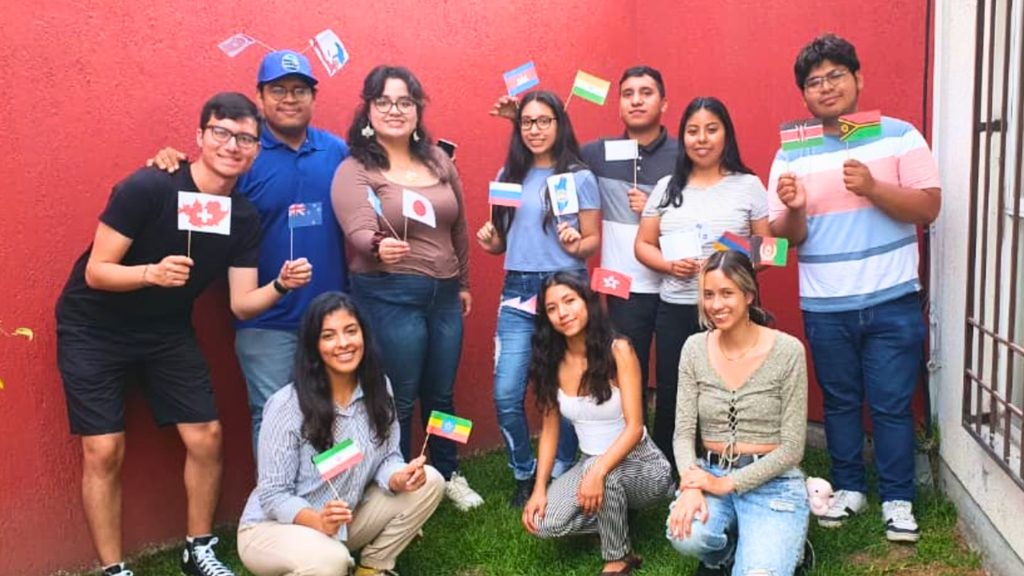
To be fair, many of us have experienced the international camaraderie of big sporting events (sorry, FIFA, not just football!). Over the years, Queenie has hosted many student parties to watch the Super Bowl, NBA finals, and the Olympics.
“As a sports fan, I recognize that sport has the ability to bring people together and to promote unity. I experienced this when I would host gatherings at my house with international students, specifically during the Olympics, and everyone’s cheering for their country, and you’re excited.”
In such moments, the possibility of a united humanity might seem real, attainable. Until the bubble bursts. Quennie acknowledges the flipside of fan behaviour:
“In New York, we saw violence happening against San Antonio fans. People being harassed and vandalism on the streets.”
If not physical violence, many of us will have seen aggressive and hateful social media posts towards rivals. From her context in Africa, Joan noticed how Morocco’s controversial win in the Africa Cup of Nations final caused many students to root for Brazil when the two teams met at the World Cup.
In and of itself, football does not unite the nations.
That’s especially true without a “level playing field” – for the nations taking part and for the fans wanting to watch. Queenie has been grieved by the restrictions on the Iran team, while Roberto is frustrated by “exorbitant ticket prices” for fans in Mexico, despite being in one of the host nations. Talk of unity rings hollow.
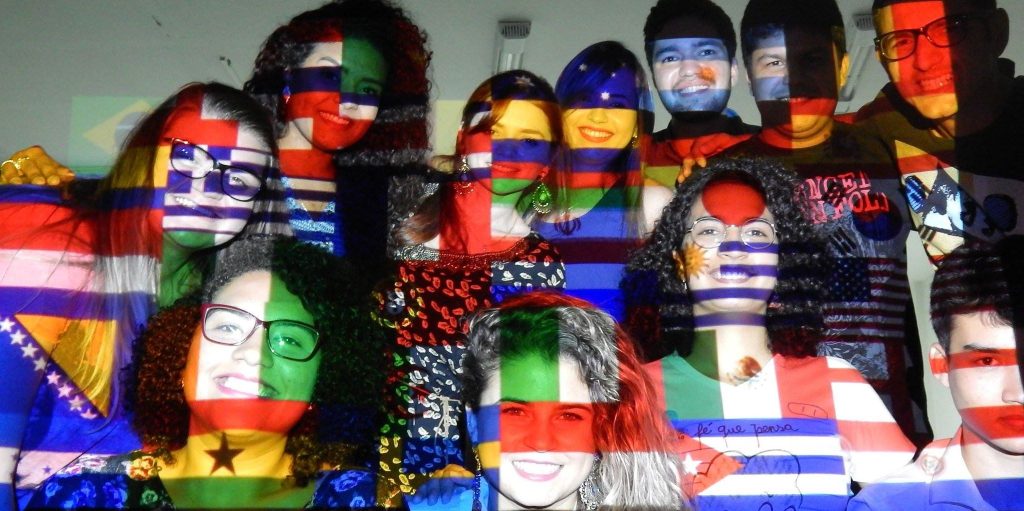
But we are part of a diverse yet united family in Christ. Socio-economic status fails to divide (Galatians 3:28). Religious and cultural walls collapse (Ephesians 2:14-16). Diverse nations and tongues join in praise (Revelation 7:9-10).
That’s why the beautiful togetherness that can be felt through football was transcended by a spiritual unity at the match between Germany and Curaçao. After the final whistle, believers from both sides huddled to pray together. Felix Nmecha explained:
“During the game we’re opponents, but after the game we’re all Christians and we’re brothers. So we came together and had a little prayer.”
CELEBRATION AND OBSESSION
Whatever your team, the World Cup is a place of celebration.
There’s loud music, collective singing, fun costumes, and colourful face paint. And above the paraphernalia we applaud inspiring talent (Clever tactics! Creative play!) and impressive performances (Solid endurance! Brilliant teamwork!).
Such artistry, character, and coordination point us to biblical truth – that we’re all made in the image of a Creator God who calls us to reflect his qualities (2 Peter 1:3-8) and thrive as a community with complementary roles (1 Corinthians 12).
It’s good to celebrate talent. In his opening webinar comments, Roberto notes the “footballing prowess” of Morocco and mentions the historic nature of this World Cup as the last for Ronaldo and Messi (and Mexico’s Ochoa!).
Some players stand out for being exceptionally gifted. And fans debate whether they’ve earned the label of GOAT (Greatest Of All Time). This is the terrain where fun can morph into fanaticism, where models may become idols.
(After all, there can only ever be one true GOAT. Clue: he’s a lion and a lamb – Revelation 5:5-6.)
Perhaps this is why one webinar attendee asks about the issue of idolising top players.
Joan brings a helpful perspective. She’s had the privilege of interacting with professional players who’ve shared with her some of their struggles. When she’s asked them what to pray for, she’s been surprised that it’s not ‘to be the top goal scorer’ but things like ‘to not get an injury’.
She’s come away with renewed empathy, “seeing them beyond their glory, beyond their success, as your fellow child.”
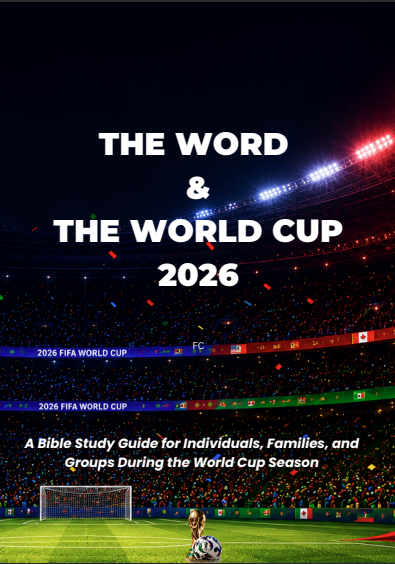
In The Word & The World Cup 2026, a Bible study guide she co-authored, the chapter called ‘When Football Becomes a God’ invites reflection on Matthew 6:19-24:
When love for the game turns into obsession… it can quietly shift from enjoyment to worship. Jesus speaks directly to this tension by showing that the human heart cannot serve two masters.
FAIR PLAY AND JUSTICE
For a game to work, there can only be one set of rules.
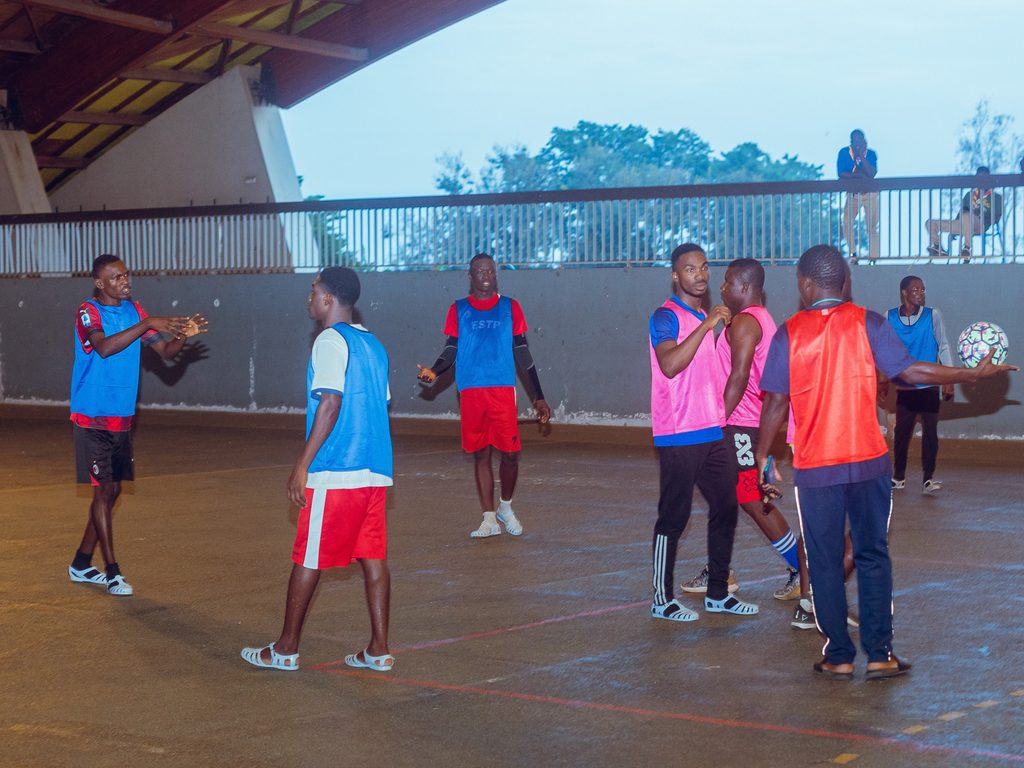
Referee decisions may be debated – as seen again at this World Cup. But the game can be beautiful because rules exist, because a referee is on the pitch, because he has coloured cards in his pocket, because the offside rule applies as much to France as it does to Uzbekistan.
Our God-given longing for justice means that we are satisfied when a reckless tackle is penalized. And it upsets us when the God-defying tendency towards favouritism, greed, and inequity emerges – when standards off the pitch are far from ‘fair play’.
For example, due to unaffordable tickets, Roberto says that most Mexicans can only watch on digital platforms – which have raised prices – or in public spaces, where FIFA has introduced measures to charge businesses broadcasting matches for a sports broadcasting licence. He laments:
“So, everything revolves around cost-benefit – everything, absolutely everything.”
And Queenie asks:
“What does it mean to be a sports fan and recognize the injustices that exist behind sports?”
She’s been involved in InterVarsity/USA’s Global Urban Trek program, with a team of students in Houston, one of the US host cities for the World Cup. During orientation, they partnered with a local organisation that gives van tours to help participants learn about the reality of human trafficking.
Queenie explains:
“So there are lights and markers around parlours in Houston that indicate it’s a place for sex workers or human trafficking. And it’s really heavy and dark… observing and seeing people on the street, or even seeing houses or businesses with these markers.
“What we learned is that because of the World Cup, there has been an increase in human trafficking, specifically in commercial sex.”
The beautiful game is marred not only by foul play in it but also by the injustices that surround it. Joan shares that a recurring Scripture during their World Cup prayer times has been Psalm 82:8 – a cry for the God to whom all nations belong to rise up and judge the earth.
ENJOYMENT AND LAMENT
It’s in the Psalms where joy and lament are so clearly held side-by-side in tension, in faith.
This array of songs that stirs us to worship and weep, to rejoice and repent, echoes our own experience – and the paradoxes of the World Cup.
Roberto speaks warmly of how it looks for him:
“There’s food – the best food – and lots of emotion. We end up talking about what’s going on around the World Cup… and talking about football takes a back seat.
“The dialogue allows us to connect, to build bridges, to serve one another, to share a meal, to enjoy this event. But it’s also a safe space to debate our ideas. To talk about justice, about challenges and struggles.
“And we simply mustn’t fail to enjoy it given just how wonderful football is. It’s a space for joy and enjoyment, but also for embracing and crying, isn’t it?”
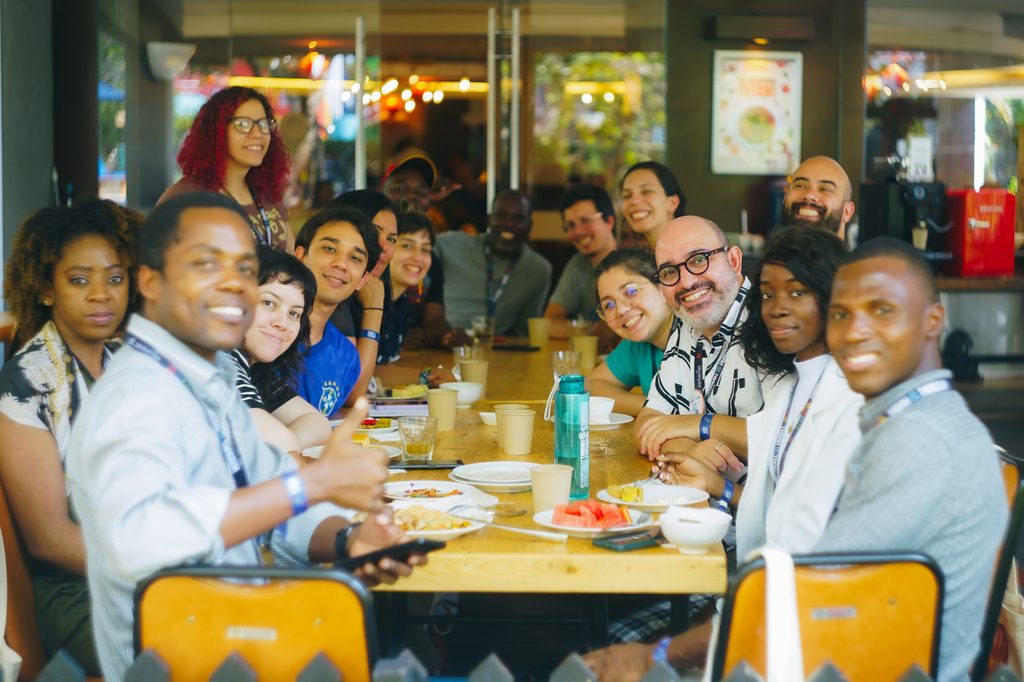
Queenie agrees. She’s noticed how many students who she’s connected with need space to process when there’s been tension around a game.
“Where I’ve held events and know that [the result] might land poorly for some of my students, I’ve offered, ‘Hey, if that was hard for some of you, I’m gonna take you out for ice cream, and we can have a conversation.’
“I think it’s really helpful when you can provide both a place of celebration and a place of lament and grief.”
And this kind of processing space can extend beyond a match loss to broader issues of social justice. Queenie says conversations around college sports often lead into discussions of the pressures on college athletes, whether it’s competition over contracts or inadequate mental health care.
Robert expresses the tension well:
“Whenever I think of the student movement, I think of it as a safe space. And that we are ‘the third option’ on the political spectrum. In other words, we’re not on the left or the right, or black or white, but rather we are the space itself.
“We can enjoy the World Cup without losing sight of how unfair the world around us is.”
WHAT A SAVE! BEAUTY MARRED AND REDEEMED
If you don’t particularly enjoy football, you can still appreciate the God-given beauty that’s manifest in it. The collective spirit. The celebration of talent. The ideal of fair play. The enjoyment of life.
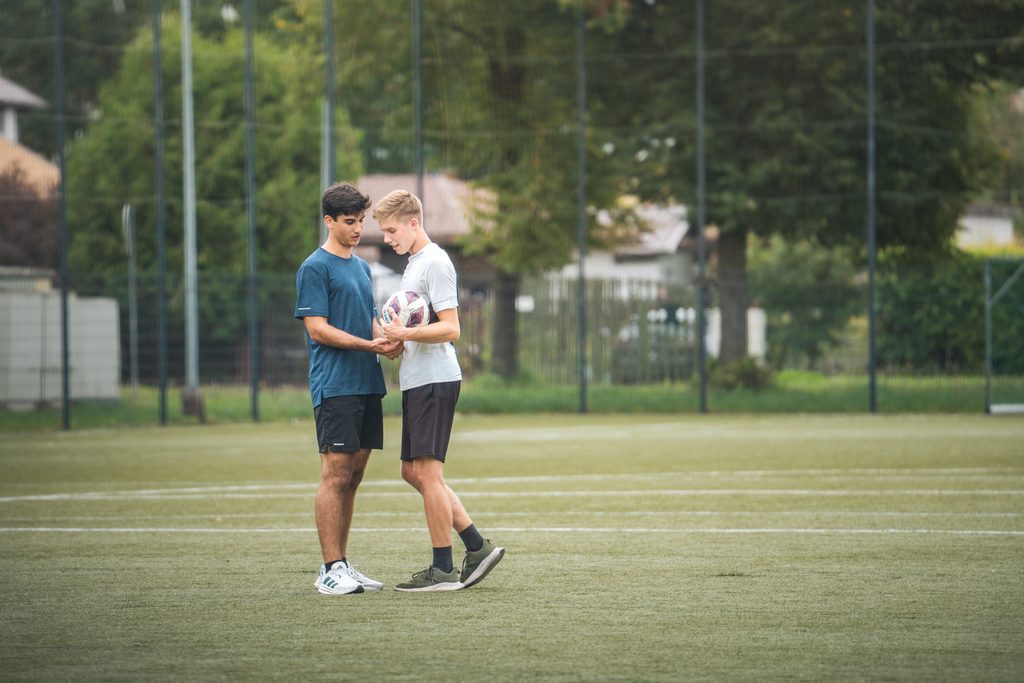
And if you absolutely love football, you can still see the man-made ugly side. The divisive prejudice. The obsessive idolization. The greedy corruption. The lamentable injustices.
This is why the World Cup, with its delightful highs and disturbing lows, powerfully connects us to the biblical narrative. A good creation marred by sin, longing for redemption (and the GOAT who will make the perfect save).
This is why witnessing to the Word during these days is profoundly more than mentioning a goal-scoring player who points to the sky.
Joan’s slogan has been: “Every match, a discipleship moment.”
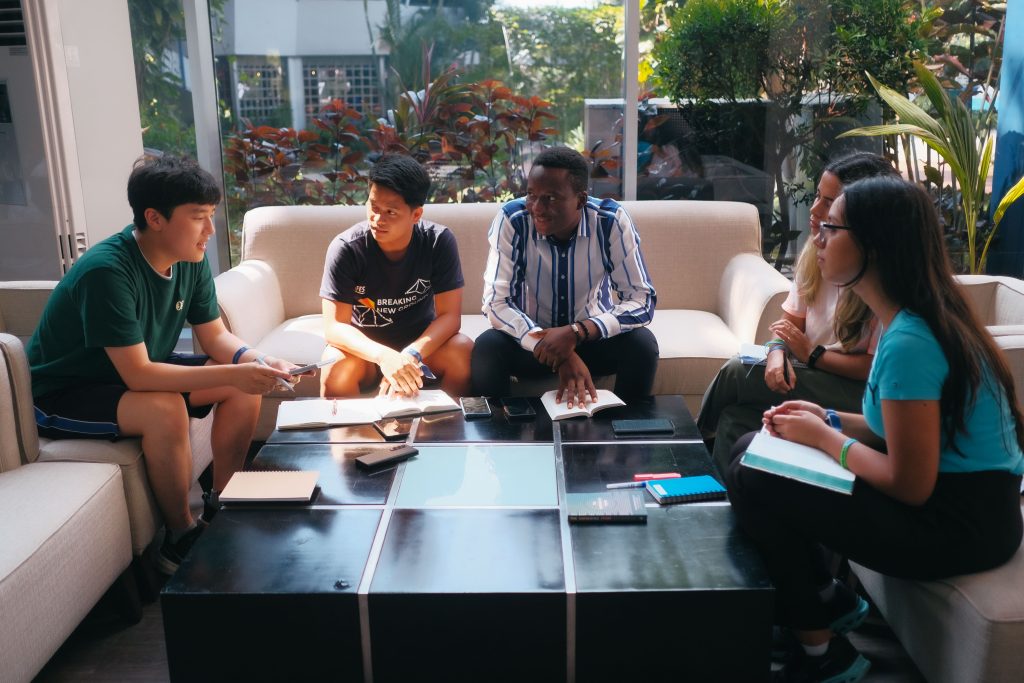
The Bible study guide she co-authored gives a flavour of how. By exploring deeper issues of the beautiful game – identity and worth, achievement and success, endurance and discipline, idolisation and obsession – it shows how we can become more beautiful in Christ.
Another Bible verse that’s been guiding Joan during this World Cup is Habakkuk 2:14. She shares:
“Even in my praying, that is what I’ve clung to – that the stadiums, the locker rooms, the hotels, the brothels… all this space will be filled with the knowledge of the glory of God.”
This is our hope: a broken world that’s already being restored through Christ.
It is very beautiful, indeed.
Watch the webinar
Use and share The Word & The World Cup 2026 Bible Study Guide