
TABLES AND STARS
Reflections on Hospitality and Kindness
Stepping outside of the familiar, beyond your comfort zone, often stimulates reflection on life and ministry. That was certainly Dara’s experience.
Last year, she travelled from her home in Colombia to Norway for a six-month exchange program between IFES movements, UCU Colombia and Norway NKSS (Laget). The mission was the same, but the country, culture, and language was very different.
So, what did she learn?
In this Conexión blog we hear from her. She shares her experiences of hospitality and kindness, reflecting on their place in the mission of God and student witness.
SITTING AT THE TABLE: SHARING LIFE
For many in Latin culture, the table has always had a special value.
Beyond being just another piece of furniture in the home, it is a space that makes encounter possible: around it we share food, but also life itself. At the table we talk and listen, invite and welcome, serve and love. Those who sit around it have the opportunity to ask and receive questions.
In many ways, the table is a place where we can look one another in the eyes.
As a space oriented toward human interaction, the table turns food into a language of love. Every meal carries an intention toward the other, a willingness to give, and a sign of hospitality.
My Table at Home
In Colombian culture, and from my perspective as a woman born and raised in El Eje Cafetero, the table carries deep meaning.
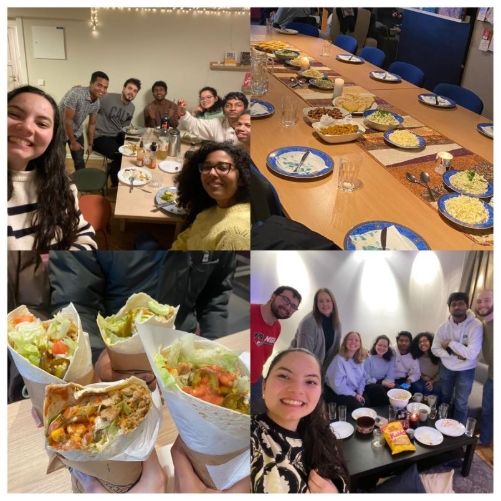
It is around the table that families gather to share and celebrate; where memories are strengthened with friends; where newcomers are welcomed as if known for a lifetime. At the table, birthdays are celebrated, important decisions are made, loving confrontation takes place, and encouragement is given in difficult moments.
Behind what happens around the table there is a whole symbolic language that speaks of community, belonging, and care.
(What happens around the table represents community, belonging, and care.)
Beyond its cultural meaning, an important question arises: could the table also be part of mission?
At the Table of Jesus
The answer seems to be yes. In the Gospels, much of Jesus’ mission took place in villages, on roads, on mountains… and also around tables.
Jesus shared meals with tax collectors and sinners to announce good news (Matthew 9:9-12; Mark 2:15-17), challenging the expectations of those who believed that seats at the table should be reserved for them. He sat at the table with Zacchaeus (Luke 19:1-10). In Bethany, Mary anointed him while he was at the table (John 12:1-3). Something similar happened when Jesus visited Simon the Pharisee (Luke 7:36-50). Before his death, he celebrated the Passover with his disciples (Luke 22:14-20), and after his resurrection, it was while breaking bread with two disciples that they recognized him.
It seems that the table holds an important place in Jesus’ life and ministry. It is not only a place to do things but also a space to be present with others.
A Missional Table
During my six-month internship, in the midst of student ministry, learning, and intercultural experiences, I have observed this: meaningful questions, deep conversations, life stories, and the grace of God became visible around a cup of coffee, while sharing a table, or even while preparing arepas.
Around the table, we shared Scripture on Monday mornings with the Laget team, encouraging one another. Later, around the same table, we planned, reflected, and dreamed together.
Around the table, I have also had deep—and sometimes challenging—conversations with my teammate. These conversations invited us to know one another better and to recognize God’s presence even in our differences.
Preparing food together, setting the table, and sharing what we have cooked has become a simple yet meaningful way of sharing who we are and where we come from, strengthening our teamwork.
I especially remember Christmas Eve. Colombians, Brazilians, and a Mexican sat together around the table to celebrate Christmas. In a different place, thousands of kilometers away from our homes, we remembered together the hope brought by the birth of Jesus and the promise of life for humanity.
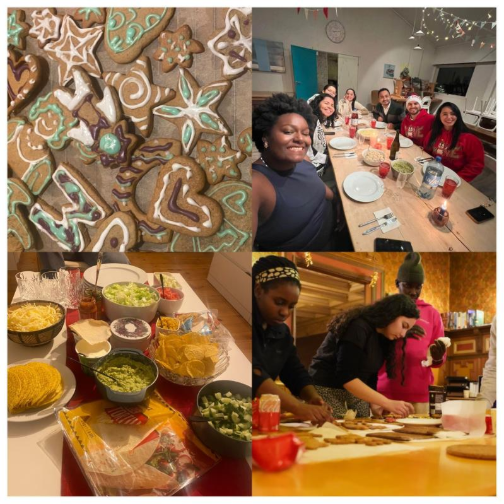
Around the table, good conversations also emerged after a Sunday at church or a Friday youth gathering, while we drank coffee and responded to questions.
It was around a table that I enjoyed taco fredag, learned new Norwegian words, discovered the difference between bokmål and nynorsk, baked gingerbread cookies, and listened to stories about Norwegian Christmas traditions.
Tables on Campus
At different faculties in Bergen, I had many conversations with students that began around a table. I talked with students with different opinions—or none at all—about God. Some were curious why someone would travel so many miles to come to Norway.
And in the midst of those conversations, I could see how some faces changed when they heard that the greatest proof of God’s love is that he chose to love, giving himself up – and that he continues to use many means to make this known, even bringing this servant all the way round the world.
Everyday Grace
Perhaps that is why the table remains a place of mission. Where bread, stories, and life are shared, God’s grace also becomes visible.
Sitting at the table may seem like an everyday occurrence, but it is a simple yet profound way to proclaim love, build community, and remember that life is best enjoyed when shared.
Around the table, Jesus continues to teach me that it is better to serve than to be served.
SKY FULL OF STARS: SPREADING KIND WORDS
Have you ever thought about how your words can create, encourage, sustain, or bring hope?
“Death and life are in the power of the tongue, and those who love it will eat its fruit.”
Proverbs 18:21
Words can become bridges between people. They can carry good news to someone who needs it at the right moment. In a world full of noise and negativity, there is always an opportunity to be light in the darkness.
Wednesday after Lagslunch
During Kindness Week 2025 at Volda University, a group of students gathered for lunch, not knowing that something simple would turn into something meaningful.
Conversations began with questions like: “What’s your story?”, “How did you come to know Jesus?”, and “How do you want to be remembered?”. As they talked, laughed, and shared, an idea started to grow.
Good News Through Paper Stars
We had already planned to write short encouraging messages as part of our Kindness Week initiative.
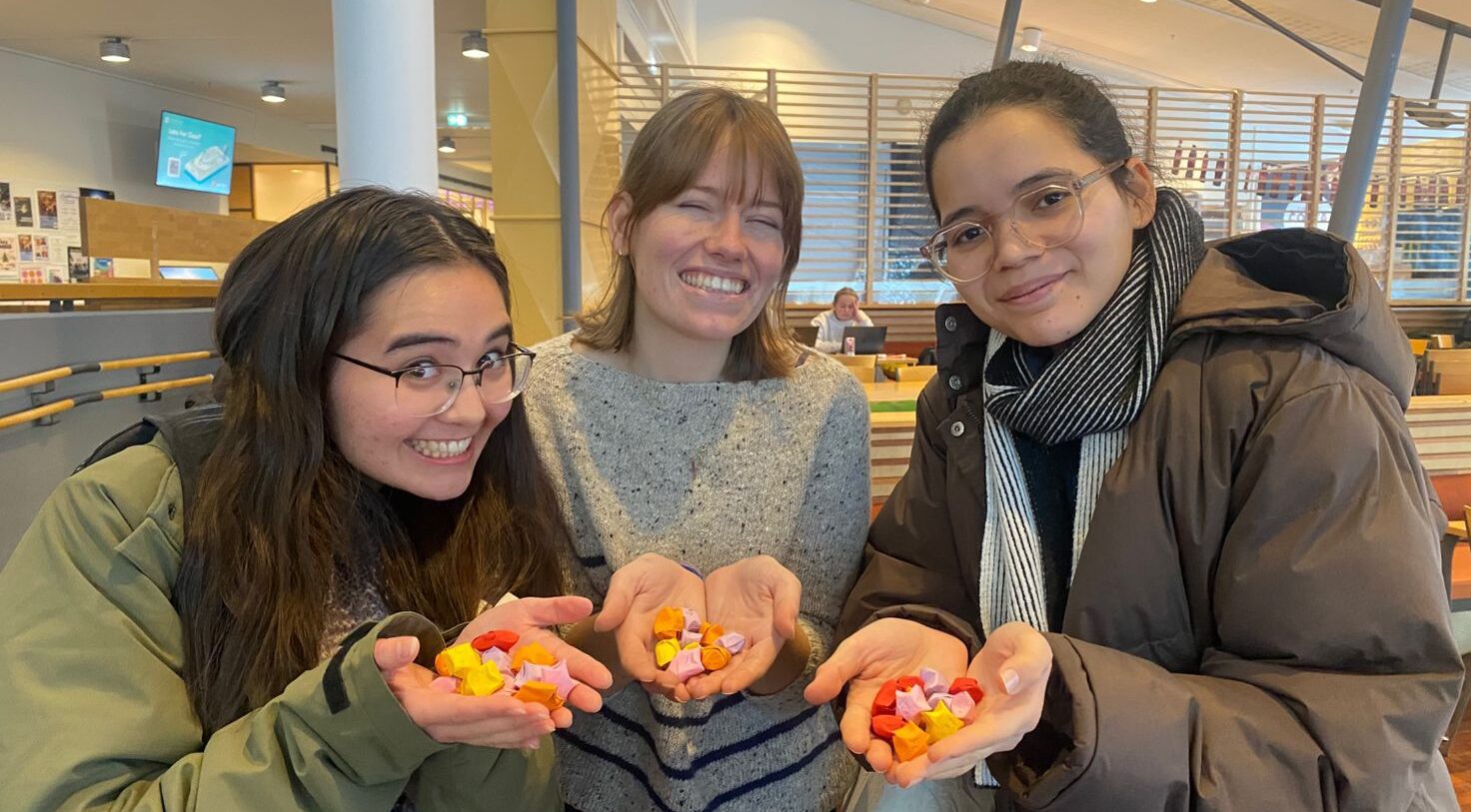
We decided to write them on paper stars, symbolizing light in a dark sky. Even when the night seems vast and overwhelming, stars still shine. In the same way, we believed that small acts of kindness can make a difference.
At first, not everyone felt comfortable.
One student honestly said, “This seems a little silly.”
Alice responded kindly, “Thank you for your honesty, but I really think it’s nice to do something for someone else. You never know when you might need words of encouragement — even if they come from a stranger.”
Emma added, “Let’s not be ashamed of kindness.”
Stars Everywhere
So we continued. We wrote, cut out, and placed the stars around the cafeteria, on classroom doors, and in the hallways.
Soon, the university looked like a sky full of stars.
Some of the messages included:
Your life is important. Make it count.
Do well on your exams!
Jesus loves you! Have a nice day.
Stop, breathe, and try again. This isn’t the end.
Don’t let today’s worries cloud tomorrow’s sunshine.
The reactions were a mixture of surprise and gratitude. Some students smiled quietly. Others expressed how much they appreciated it.
One said, “Wow, you made my day. I’ve been so stressed with exams.” Another asked, “Is this star really for me? I’ve never received something like this before.”
Even Sigurjon Bjarni, who described himself as “not very religious”, returned the following week and said he truly enjoyed the conversations and wanted to come back again.
Interestingly, it impacted not only those who received the stars. It also transformed those who gave them.
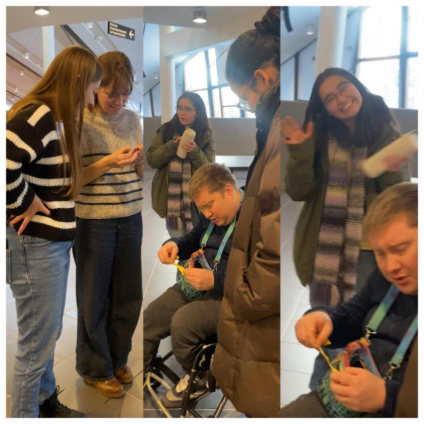
Alice later shared that she was initially afraid of how people might react. However, when she saw their happiness and surprise, she felt encouraged. In that moment, she realized that kindness blesses both the receiver and the giver.
A Message to Shine By
That day, the students put into practice the words of Matthew 5:16: “Let your light shine before others.” Like stars in a dark sky, even small words can shine brightly. Sometimes, spreading kindness begins with something as simple as choosing to speak life.
By Dara Camila Franco Alarcón
Dara’s immersion in intercultural ministry – sharing life around bustling tables, spreading kindness through paper stars – has given her a richer experience of God’s mission on the world’s campuses. Dara’s reflections affirm that such ministry exchanges can benefit both the person going and the host movement.
If you’re a student or staff worker, have you considered spending a week, a few months, or longer with another IFES movement?
Speak to your national movement or IFES regional team, or explore “other opportunities” here.