
UPWARD & ONWARD
Thriving Together in Graduate Ministry
In uncertain times, it’s true to say, “God is sovereign”. But unless you live in a way that demonstrates your belief, aren’t those words just hollow theology?
This is why the organising team for IFES East Asia’s Graduate Conference (EAGC) tweaked the title of their 2025 gathering in the Philippines. They added to “Sovereign God in Uncertain Times” the Filipino phrase, Pataas ug Padayon. Literally, it means “upward and forward”.
The phrase carries the sense of progress communicated by “onwards and upwards” in English. But in this setting, the “upward” stood for eyes looking up to the Lord of heaven and earth. And the “forward”? A resultant, faith-propelled step onward.
In this Conexión blog, we explore the impetus for IFES graduate ministry. We’ll feel the forward thrust generated by EAGC. And we’ll observe how momentum is building across the fellowship for support beyond university.
ONWARD: BEYOND THE PANDEMIC
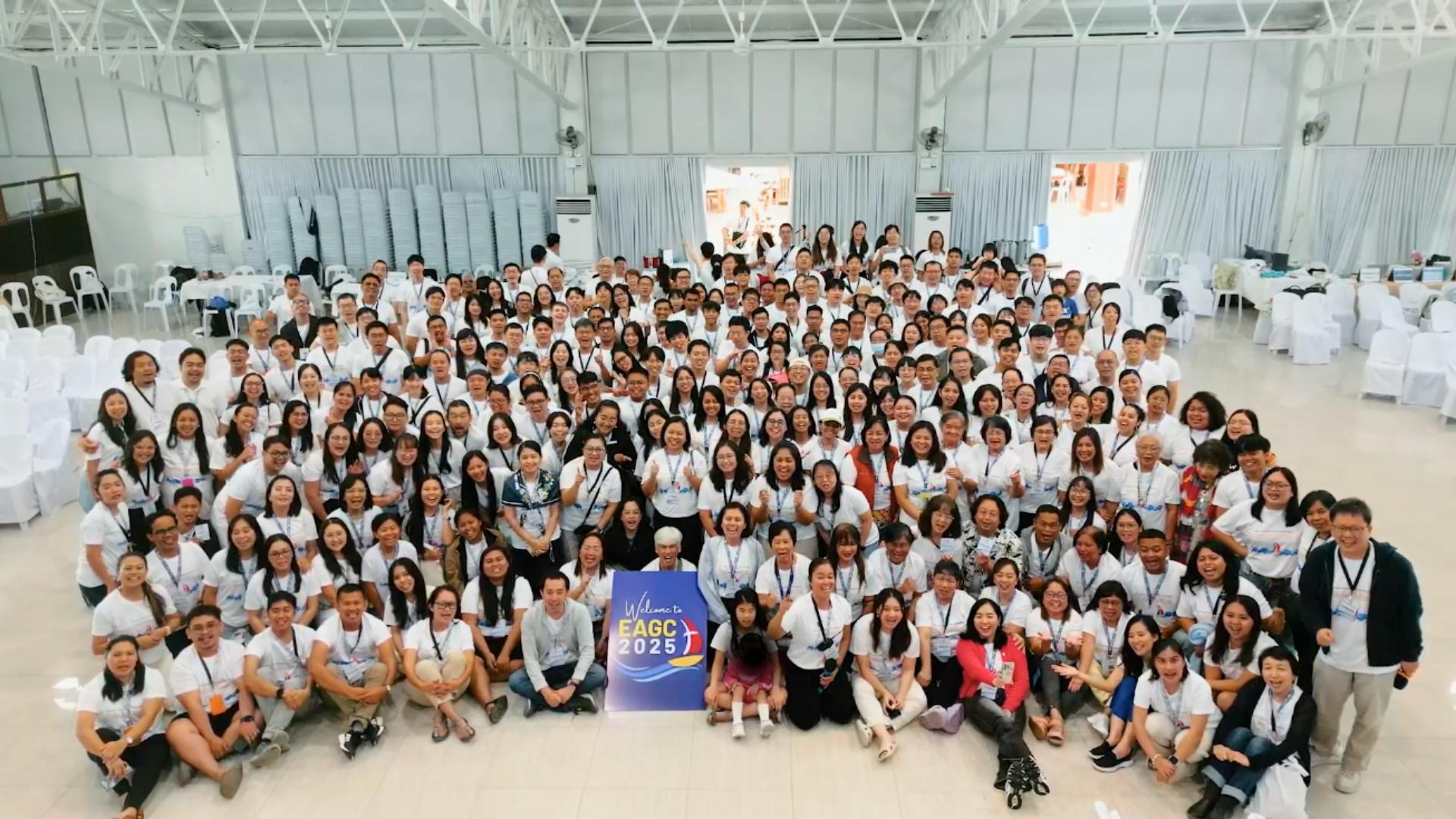
About 300 graduates and alumni from 15 movements across East Asia gathered in Tagaytay, Philippines, in August 2025. But it wasn’t just another IFES conference. Granted, it was the 13th EAGC, traditionally a triennial event. But this time around, the region had waited six long years.
Although planning started in 2019, the intended 2022 date had to be abandoned due to COVID-19 restrictions. Throughout those uncertain times, Ching Lopez and Edward Sampaga, graduate volunteers in IVCF Philippines, were part of the regional steering group and co-led the host committee.
Edward remembers:
“It was quite challenging. I guess this was the first time that EAGC organisers had to prepare for that long! But for me, it was unique. Because we were serving through three very different periods: pre-pandemic, pandemic, and post-pandemic. And it seems to me that God was allowing us to go through these three seasons to make a point that he is really sovereign.”
Others felt it too. In the midst of COVID, the steering group – with representatives from across the region – explored Scripture together and were drawn to the book of Esther. They agreed on the title of ‘Sovereign God in Uncertain Times’.
Ching adds:
“Arriving at this theme was a collective gesture and discussion. When we took it to the host committee, we added a little layer of local words, local context – the upward and onward.”
Edward explains:
“Just declaring that God is sovereign in uncertain times wasn’t enough. It needed an action. And in the post-pandemic period, Pataas ug Padayon felt very timely. It’s like we had go through those years to have a more meaningful and fruitful conference.”
But for that to happen, Ching and Edward had to themselves take forward steps in faith.
UPWARD: GOD’S HAND ON EAGC
Besides their full-time jobs – Ching working in textile research for the Department of Science and Technology and Edward managing a department at an online language school – they spent evenings and weekends tending to EAGC logistics.
It was hard. Along the way, some committee members left. Ching sympathises, noting how she often felt she could have also given up.
“I felt very much like a Martha – always working hard to get things right and put things in order. But the Lord taught me to submit my dashboard of objectivity to him and lay my expectations at the foot of the cross.”
Edward had wanted EAGC to come to the Philippines ever since his first experience of it in Thailand in 2016. But he’d never imagined he’d become part of the organising team – or how much that would involve.
“We had many lows in those first three years when we were searching for a venue. And in the final months, it was very stressful – whether we’d have enough funds to pay the venue.
But the Lord spoke to me many times. He kept telling me that this is not your EAGC, so just do what you can do – help is coming. It became very clear that it wasn’t about me or what I wanted, but about what God wants to accomplish through this event.”
When the time came, Edward saw God’s faithful hand:
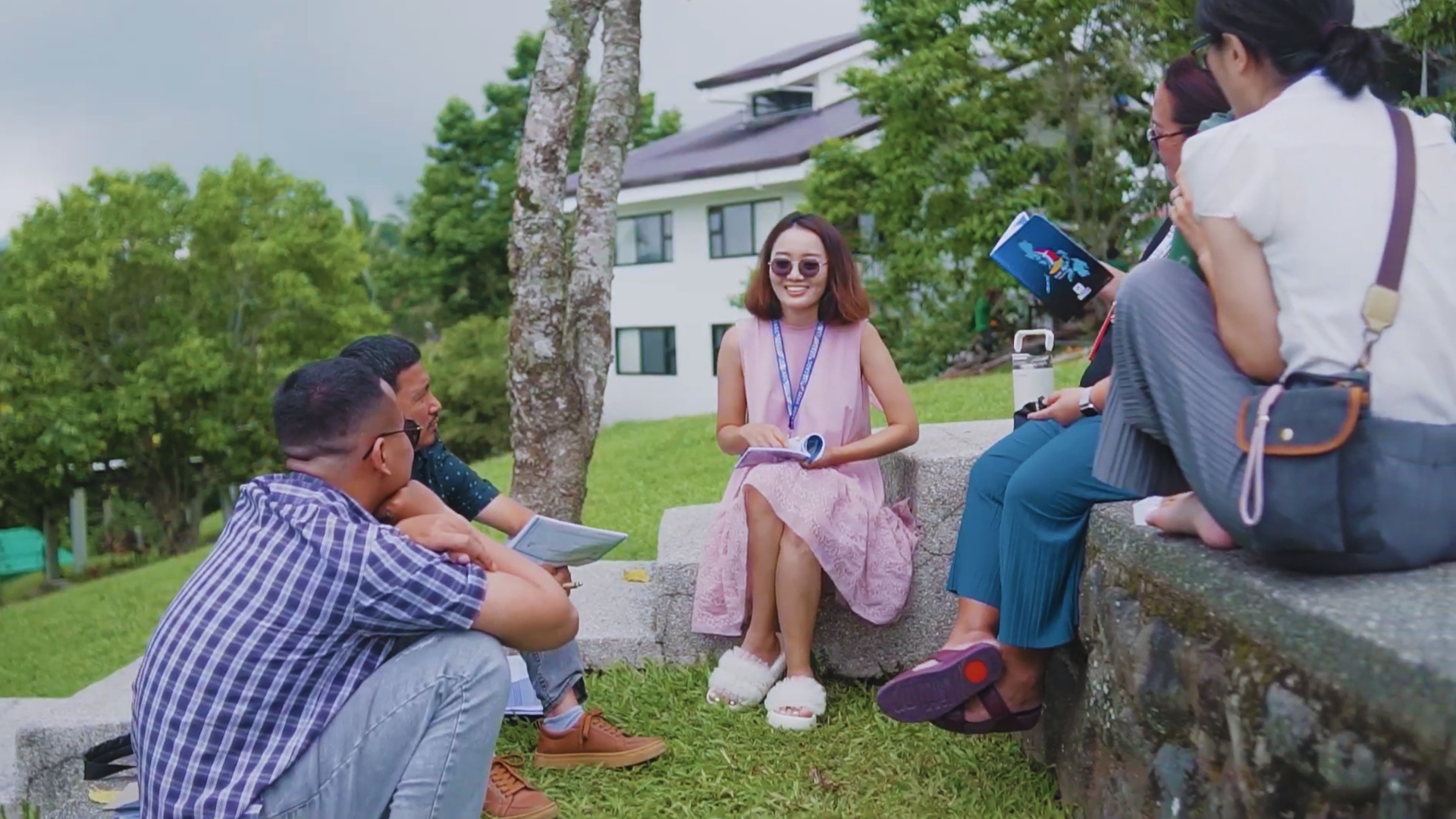
“Hearing the testimonies and the speakers. Seeing laughter during small groups and all of them singing together. Watching sensitive movements gathering until late night, fellowshipping freely in the Philippines. Hearing Filipino graduates tell me that they now see what I felt back in 2016. All of that was enough for me to say that EAGC was a success!”
ONWARD: GROWING GRADUATE MINISTRY
But another sign for Edward has been the ongoing impact. In his area of the Philippines, in Cebu and surrounding islands, he’s heard that graduate groups have revived. He’s been tagged into social posts about graduates inspired by EAGC now meeting together.
This was what he’d hoped for:
“At my first EAGC in 2016, I saw how some movements were very organised with their graduate ministry. They had strong mentorship programs for fresh graduates. I wanted to see that in the Philippines. I thought that if we hosted EAGC here, more graduates could see it and be motivated to build this stronger community.”
To capitalise on this momentum, Edward and Ching are in conversation with IVCF leadership. They are exploring if their relatively unstructured graduate network can be organised into a more systematic ministry over the next decade.
Having benefitted from IVCF ministry as students, both Ching and Edward were eager to help local campus groups when they graduated. And, as they offered support to students, they also supported each other with the transition into working life.
Ching sees the need for a “bridge” at this stage in life:
“The sad thing is that some whom we knew from discipleship groups have left the faith. So, we must catch new graduates at this crucial moment.”
Such experiences are widespread. In 2019, Barna Group and World Vision surveyed 18-35 year-olds across 25 countries for The Connected Generation report. They found that more than half of those from a church background had “dropped out”.
Graduate Impact, an IFES Global Resource Ministry, also conducted research in 2017-2021. Among young Christian adults in Europe and Eurasia, they found:
“Young Christian professionals frequently experience a disconnect between their faith identity and their work identity. For some, this disintegration can be an impediment to a continued life with Jesus. For others, this dualism limits their personal flourishing, inhibits their opportunity to bring a Christian influence into their workplace, and diminishes their potential for societal impact.”
It is such issues that the six-module Cross-Current course is addressing – not only in Europe and Eurasia, but now also in East Asia and Latin America.
UPWARD: A NEW GENERATION STIRRED
At EAGC, Ching and Edward were encouraged to see how God had stirred many young graduates to attend.
“This was very awakening for us! The conference fee and transport costs meant that we expected to have mostly graduates who’ve worked for at least 10 years and been able to save. But around 80% of participants were in their 20s and 30s. We were so excited to see this new generation really seeking the Lord.”
Dalin recently graduated after serving as a student in SONOKO Cambodia for almost five years. She shares:
“It was such a refreshing and powerful experience. God reminded me that He is sovereign, unchanging, and fully in control. Through the fellowship, worship, and teachings, I was recharged and encouraged to keep using my gifts for His kingdom. During the conference, God spoke clearly to my heart: “There are no half races.” He reminded me to run faithfully and wholeheartedly, not giving up halfway but finishing the race He has set before me.”
Lydia, from FES Hong Kong, left ready for new challenges:
“At workshops, professionals from various nations and regions shared how to integrate theology with experience. It prompted us to reflect on our own faith practices and discern our positions and responses.”
And Ho Yi Jin, from FES Singapore, recently started a job as a social worker:
“As a fresh graduate entering the workforce, I had many uncertainties ahead which I wanted to seek answers to.
“I was deeply impacted by Esther. How God can use anyone, regardless of role, to shine for Him and be a blessing to others. How we shouldn’t compare our positions with those of others but instead focus on doing well in our calling.
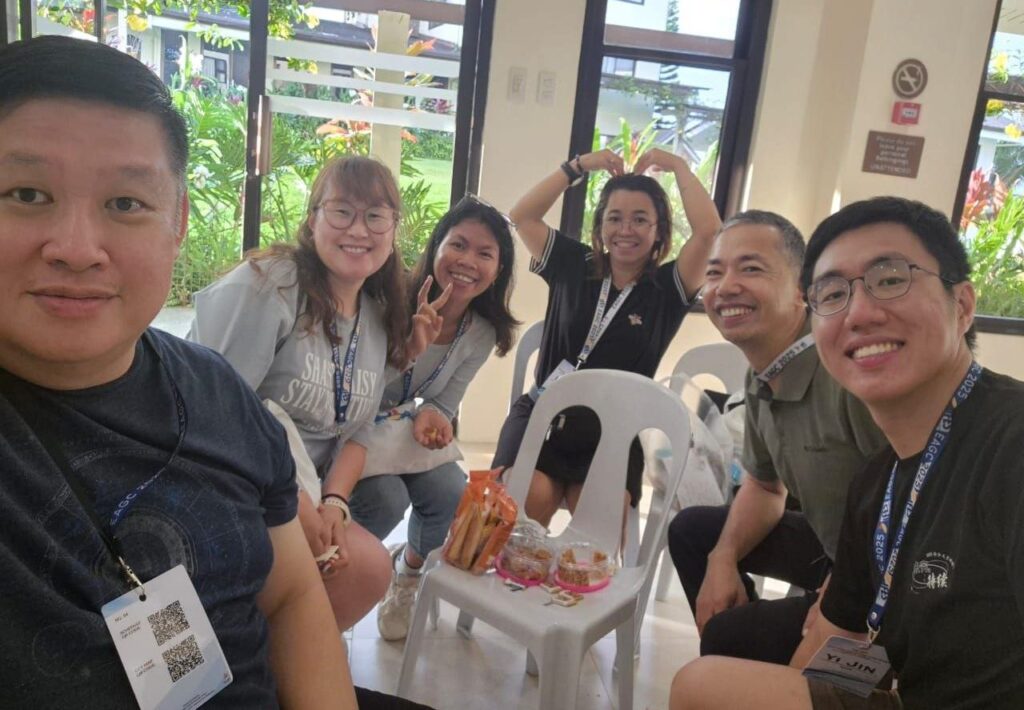
“I enjoyed a plenary about how work can also be a form of worship to God as we discover our mission there.”
ONWARD: MORE GRADUATE IMPACT
Many IFES movements are seeking to respond to their graduates’ desire to serve fruitfully in the workplace. Fellowship surveys from the last three years reveal that many movements consider it a Top 10 ministry priority for which they would appreciate support.
Many movements already have graduate ministry as an integral part of their organisation. SMD Germany, SCOM Malawi, and NBCBS Nepal. are three good examples. This shows that IFES can be instrumental in facilitating a sharing of ministry experiences and best practices.
For EAGC, each movement was asked to share a three-minute presentation about how they are ministering among graduates. Ching notes:
“It was very helpful to hear what others have been doing. Some meet in secret, others openly. Some had structures that we don’t have. And we shared how we have many volunteers rather than staff workers.”
As always in the IFES family, each context is different. But the cross-pollination of ideas and stories can be inspirational. And successful content and programs can also be adapted.
Over 20 years, the Graduate Impact team has developed successful training programs. Movements in over 40 countries have adopted and adapted them – with translations into Portuguese, Norwegian, Russian, Romanian, Malaysian, French, and Spanish. A recent training session in Ecuador, drew 30 professionals from 10 countries in the region.
Guadelupe (Lupita) Muñoz, General Secretary of CECE Ecuador, said:
“I give thanks to God for continuing to raise up professionals who swim against the current, who live out their faith with purpose in every area of life.”
To boost the reach of Graduate Impact, the team recently launched an ambitious three-year plan. It includes the nurturing of more local leaders of Cross-Current and the development of resources – with up to 50 videos of key Bible talks.
UPWARD & FORWARD
It’s six years since the pandemic. For different reasons, the world still seems a very uncertain place.
Nonetheless, students continue to graduate. Every year, millions exchange the campus for the workplace. And those who have been vibrant witnesses for Christ as students are wondering how to apply their faith to the “many uncertainties ahead” (as Yi Jin put it).
In today’s turbulence, an upward gaze fixed on a Sovereign God and forward steps propelled by that faith will be vital – not only at university but in church and society as well.
Through regional gatherings like the EAGC. Through informal sharing and partnerships among IFES movements. Through Global Resource Ministries like Graduate Impact. We can seize the opportunities to thrive together in all of life. For all of life.
Glimpses from EAGC 2025: 👉🔗
Bridge the Gap with Transition
Transition is a discipleship tool for graduating students and young graduates. Help them remain rooted in Christ and see their workplace as a new context for whole-life-mission.
Copies of the Transition booklet are available from andra@graduateimpact.org
Related Posts

Woven threads
Graduate ministry that works
The Most Vulnerable Transition
Starting Right After University
Standing for Jesus in the workplace
How IFES equips graduates for life after universityAgents of hope
How graduates in Ghana are transforming communitiesWorking among the unreached
When graduates move to work in strategic locations for the gospel